
Related Posts
- ▶ Can a Steel Industrial Workshop Be Built Near Residential Areas?
- ▶ Natural or Mechanical Ventilation for Steel Industrial Workshops?
- ▶ Which Insulation Is Best for a Steel Industrial Workshop?
Online Message
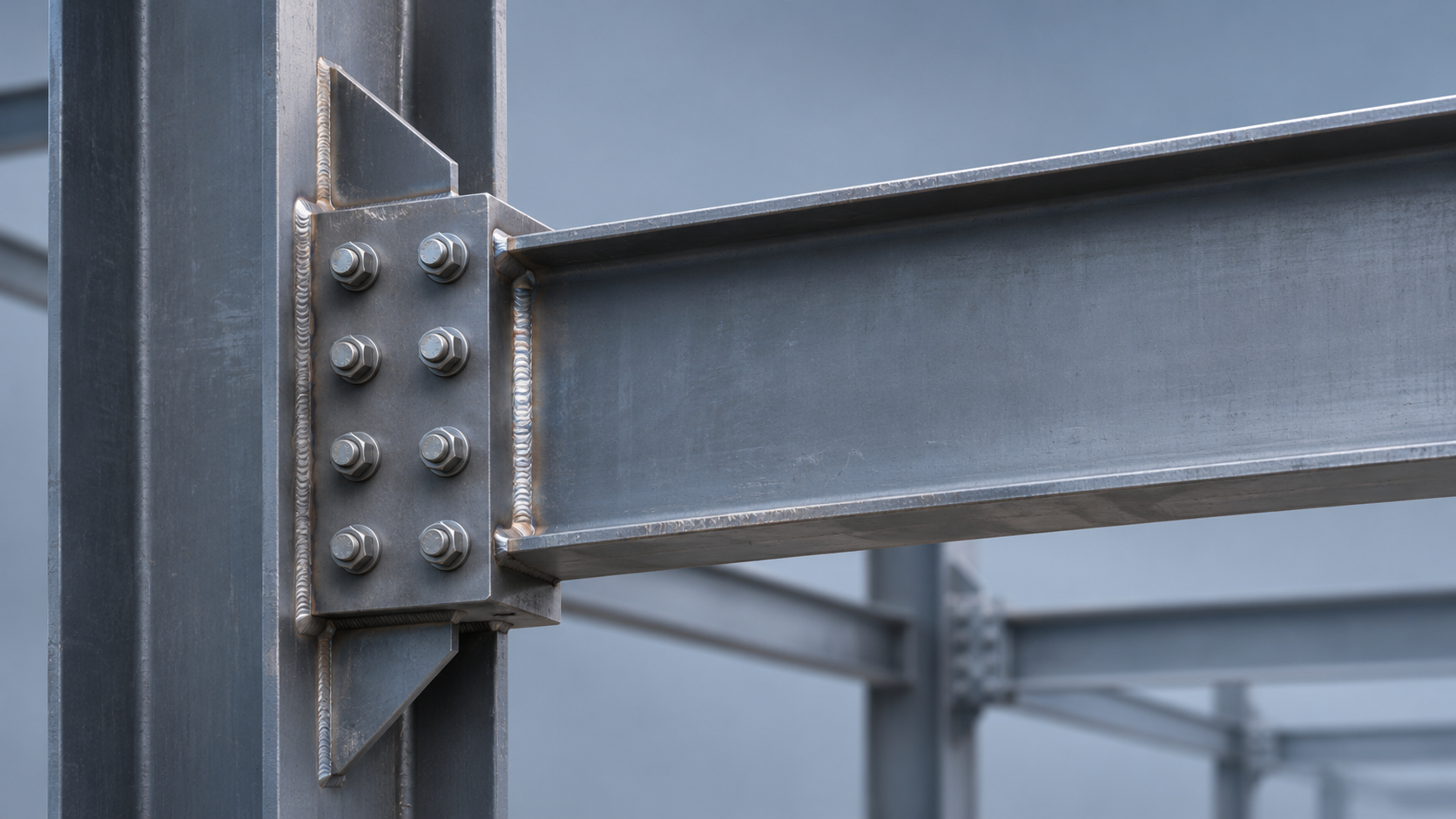
Choosing between welded and bolted steel connections affects more than joint strength. It also shapes fabrication workflows, transport, site installation, inspection, and project costs.
For technical evaluators, the right choice depends on design loads, available equipment, quality control requirements, and construction conditions. This article examines the practical trade-offs of each approach in Steel Structure Design and Fabrication, helping project teams assess connection options from factory production through on-site assembly.
For many prefabricated buildings, a practical starting point is shop welding combined with site bolting. The final arrangement must still satisfy the structural design and project conditions.
Which connection strategy fits the project?
Neither welding nor bolting is inherently the stronger choice. A properly designed connection must transfer its specified forces while accounting for stiffness, ductility, fatigue, and construction sequence.
Shop welding is attractive when repetitive components can be assembled under controlled conditions. Bolted field joints are often preferable when fast erection and predictable site inspection matter.
Field welding can be justified where geometry, architectural requirements, or load transfer make it advantageous. Its feasibility depends on access, weather protection, qualified personnel, and inspection arrangements.
Before comparing unit prices, ask the design team which joints are critical to frame stability, which can be standardized, and what work must occur at height.
How do welded and bolted connections transfer loads?
Welded joints transfer forces through weld metal joining the connected parts. Their performance depends on weld type, effective size, length, material compatibility, and execution quality.
Bolted joints transfer forces through bolts and connected plates. Depending on the design, the load path may involve bolt shear, plate bearing, bolt tension, or slip resistance.
A bolted connection is not automatically pinned, and a welded connection is not automatically rigid. Rotational behavior depends on the complete joint geometry and component stiffness.
For example, an end-plate connection may be designed as a moment connection, while a welded shear tab can provide a connection intended to carry primarily shear.
Connection design must also check supporting elements. A strong bolt group or weld does not compensate for inadequate plate thickness, local buckling, or insufficient column web capacity.
Confirm whether joints are classified as pinned, semi-rigid, or rigid under the selected design standard. The analysis model and connection details should use consistent assumptions.
What changes in the fabrication shop?
Shop welding allows fabricators to assemble built-up columns, rafters, stiffeners, and connection plates using fixtures and controlled procedures. Repetitive details can improve production efficiency.
However, welding adds preparation, consumables, inspection, and possible distortion correction. Heat input and weld sequencing matter, particularly for long members and assemblies with tight tolerances.
Bolted field connections still require shop fabrication. Plates must be cut, welded or otherwise attached to members, and drilled or punched to the approved hole requirements.
Standardized end plates and bolt patterns can reduce detailing complexity and simplify replacement. They also require careful control of hole positions, plate alignment, and member lengths.
Ask the fabricator how dimensions will be verified before dispatch. For complex interfaces, trial assembly or appropriate digital and physical checks can expose fit-up problems early.
Material selection affects both methods. Confirm weldability, plate properties, bolt grades, and compatibility with the governing specification instead of assuming that similarly named steel grades are interchangeable.
Which option makes site erection more predictable?
Bolted joints can reduce dependence on field welding equipment and permit rapid assembly when components arrive accurately fabricated. Installation still requires trained crews and suitable access.
Site crews must manage bolt storage, assembly sequence, temporary stability, and the specified installation method. Missing bolts or inaccessible tightening positions can delay erection significantly.
Field welding generally needs more preparation at each joint, including fit-up, suitable welding conditions, and access for the welder and inspector. Weather protection may be necessary.
Wind, rain, low temperatures, and restricted access can affect welding productivity or compliance with the approved procedure. Schedule allowances should reflect actual local conditions.
Crane time is another practical concern. A joint that takes longer to secure may keep a lifting operation occupied, although the effect depends on the erection plan.
Neither connection method removes the need for temporary bracing. The erection engineer must define when the partially assembled frame becomes stable and when lifting equipment can be released.
For remote or overseas sites, assess the availability of qualified welders, bolt installation equipment, consumables, inspection personnel, and replacement fasteners before finalizing the connection schedule.
How should evaluators compare connection costs?
Compare installed cost across the complete project rather than selecting a joint based only on weld length, bolt count, or the quoted price of fabricated steel.
A useful comparison includes detailing, plate preparation, shop labor, consumables, protective coatings, packing, freight, site labor, equipment, inspection, rework, and the cost of schedule exposure.
Bolted joints may require additional plates, bolts, and drilling, but can reduce site labor and welding-related controls. Savings depend on connection quantity and local labor conditions.
Welded details can reduce some plate or fastener requirements, yet field welding may add access equipment, inspection, weather protection, and time for coating repairs.
Transport can change the result. Larger welded assemblies may reduce site work but exceed container, road, or lifting limits, making smaller bolted shipping pieces more economical.
For a defensible comparison, price two feasible connection packages against the same frame geometry, design loads, coating requirements, inspection scope, delivery terms, and erection assumptions.
What inspection and quality records should be specified?
Inspection requirements should follow the governing code, connection demand, execution specification, and approved project documents. They should not be chosen solely from the connection method.
For welded work, review welding procedures, welder qualifications, material identification, joint preparation, fit-up, visual inspection, and repair records. Specify nondestructive testing where the project requires it.
Ultrasonic or other nondestructive testing can be appropriate for selected welds, but the method and extent depend on weld type, accessibility, acceptance criteria, and applicable standards.
For bolted work, verify bolt assemblies, grades, hole condition, installation procedures, and inspection records. The required tightening and verification depend on the joint designation and specification.
Do not assume every structural bolt must be pretensioned. Distinguish snug-tight, pretensioned, and slip-critical joints according to the applicable standard and the engineer’s design.
For slip-critical joints, confirm the specified faying surface condition and its compatibility with coatings. Surface preparation and approved coating systems can affect the design slip resistance.
Request traceability and inspection documents before shipment, with a clear process for resolving nonconformities. Independent inspection can be arranged when contract requirements or project risk justify it.
How do coatings, fatigue, and maintenance affect the decision?
Corrosion protection should be considered during detailing. Welded joints need access for surface preparation and coating, while bolted interfaces may require specific treatment before assembly.
Field welding can damage nearby coatings, requiring local preparation and repair to the specified system. Plan access and inspection for these repairs before selecting the joint location.
Hot-dip galvanizing introduces additional detailing considerations, including drainage, venting, fit-up, and potential distortion. Confirm bolt, hole, and coating requirements with the galvanizer and connection designer.
Where cranes or other repeated loads are present, fatigue assessment may govern connection details. Weld geometry, bolt behavior, stress range, and the expected number of cycles matter.
Fatigue performance cannot be judged from connection type alone. Use the applicable standard to assess the actual detail category, loading history, and inspection or maintenance assumptions.
Bolted connections can make future dismantling or modification more practical, provided bolts remain accessible and corrosion is controlled. Changes still require engineering review and a safe sequence.
How does the choice work in a multi-span factory?
Consider a factory with several production bays, shared intermediate columns, and possible future expansion. Its connection strategy must address repetitive frames as well as exceptional interfaces.
In a Multi-Span Steel Factory Building, typical configurations include 15–30 m individual spans, 6–9 m column spacing, and optional 5–30 t crane provision.
A project may use shop-welded built-up frame members and bolted site splices to simplify shipping and erection. The engineer must design each splice for its actual forces.
Where a column is omitted, a valley beam or transfer frame may carry additional loads. Its connections deserve individual checks rather than automatic reuse of typical bay details.
For crane-equipped areas, review repeated loading, local member forces, tolerances, and access for future inspection. The selected crane duty and project standard determine the detailed checks.
Planned expansion also affects connection placement. Accessible bolted interfaces may help future work, but temporary stability and the structural effects of each construction phase must be assessed.
Thermal movement and expansion joints should be coordinated with framing and cladding details. Their locations and spacing require project-specific design rather than a fixed universal interval.
What should be included in the technical review?
Start with a connection schedule identifying each joint’s location, design forces, required stiffness, governing standard, and whether work occurs in the shop or on site.
Review drawings for bolt access, welding access, inspection clearance, erection tolerances, temporary restraint, and coating repair. Resolve clashes before fabrication and packing begin.
Ask the supplier to identify steel grades, bolt assemblies, welding procedures, dimensional controls, inspection hold points, and the documents provided with the shipment.
Finally, compare realistic fabrication and erection sequences. A connection package is only economical when the specified equipment, skills, inspection, and schedule are achievable at the project site.
Conclusion: choose the connection as part of the whole building
Shop-welded members with bolted site joints provide a useful baseline for many prefabricated structures, particularly when transport limits and erection speed influence the project.
Use field welding, fully bolted details, or another combination where the engineering and construction evidence supports it. Evaluate the load path, quality controls, and total installed cost together.
The strongest decision in Steel Structure Design and Fabrication is a connection strategy that the design team can verify, the fabricator can deliver, and the site crew can execute.
We are more than happy to serve you here. If you have any question, please feel free to contact us.