
News center
Related Posts
- ▶ Prefab vs. Conventional Warehouse Construction: Comparing Timelines
- ▶ Planning a Prefab Warehouse: Clear Span, Height and Loading Bays
- ▶ How Long Does It Take to Build a Commercial Steel Building?
Online Message
Looking for reliable reviews of Keming Steel Structure Factory? Customer feedback, project references, and independent business platforms can help you assess the Chinese manufacturer’s quality and service.
Reviews may also offer insight into communication, delivery, and the steel building design process steps. This guide explores where to find useful feedback and what to consider when evaluating a factory-direct supplier for your project.
Start with independently verifiable sources, then ask Keming for references from comparable projects. A useful assessment combines customer experience with documented checks of engineering, fabrication, delivery, and contractual responsibilities.
Where Should You Look for Keming Steel Structure Factory Reviews?
There is no single review source that can establish whether a steel structure manufacturer is suitable for every project. Use several channels and compare the evidence.
Begin with search engines, business directories, and social media. Search the factory name alongside terms such as “customer review,” “project experience,” “delivery,” and “steel building supplier.”
Try variations of the company name, including its legal entity name if available. A trading name may differ from the name used on invoices, certificates, or export documents.
Check whether each result refers to the same business. Compare website addresses, locations, contact details, and registered names before treating feedback as relevant to your supplier assessment.
Business-to-business marketplaces and industry directories may contain supplier profiles, transaction history, ratings, or buyer comments. Availability varies, and a listing alone does not prove manufacturing capability.
For each platform, determine whether reviewers are verified buyers, whether suppliers can respond, and whether ratings describe completed orders rather than inquiries or initial sales conversations.
Search professional networks and construction forums for project discussions. A contractor’s account of installation problems or responsive technical support can be more informative than a star rating.
Do not assume that a lack of public reviews means poor performance. Industrial projects often involve private contracts, intermediaries, and buyers who do not publish feedback.
Which Reviews Are Most Useful for a Buying Decision?
Prioritize feedback from customers whose buildings, locations, and delivery arrangements resemble yours. A warehouse buyer’s experience may not predict performance on a complex industrial facility.
Look for specific details about building dimensions, structural systems, engineering revisions, fabrication accuracy, packing, and installation. These details make a review easier to assess and verify.
A credible account should identify when the project occurred and explain the reviewer’s role. Recent experience is particularly relevant when staffing, production processes, or management may have changed.
Pay attention to the full project timeline. Positive comments about a quick quotation matter less if the review says nothing about engineering approval, shipment, or site installation.
Balanced feedback can be valuable. A buyer who explains a problem, the supplier’s response, and the final outcome provides more insight than a testimonial containing only broad praise.
Be cautious with anonymous comments that provide no project context, repeat marketing language, or make serious claims without supporting details. They may warrant investigation, not immediate acceptance.
Also consider whether a review describes the manufacturer, a local installer, a freight forwarder, or a reseller. Each party controls different parts of the customer experience.
How Can You Verify Customer References?
Ask Keming for references from completed projects comparable in building type, size, destination, and scope. Request permission to contact customers or their appointed project representatives directly.
Where confidentiality prevents an introduction, ask whether a contractor, consultant, or project owner can confirm limited facts. Explain that you do not need confidential commercial information.
Prepare consistent questions for each reference. Ask whether drawings were accurate, agreed milestones were met, missing items were resolved, and the final cost matched the contracted scope.
Request examples of changes during design or fabrication. A reference who can explain how revisions were priced and approved helps you understand the supplier’s working practices.
Ask how the supplier handled problems after delivery. Useful answers describe response times, replacement procedures, technical assistance, and which costs each party ultimately paid.
When possible, speak with someone involved in installation as well as procurement. Installers can identify fit-up issues, unclear drawings, missing fasteners, and practical assembly difficulties.
Independently confirm the project’s existence through public records, the owner’s website, or a professional contact. A photograph alone cannot establish who fabricated the structure or supplied every component.
Supplier-selected references are useful but may favor successful projects. Balance them with independent sources and ask how the manufacturer has addressed comparable problems in other orders.
What Should Reviews Reveal About the Steel Building Design Process Steps?
For a prefabricated building, customer feedback is especially useful when it describes how requirements became approved drawings and how changes were controlled before fabrication began.
1. Requirements and site information: Check whether the supplier requested building use, dimensions, location, design loads, foundation conditions, access constraints, and local approval requirements before pricing.
Ask past customers whether important assumptions were documented. Unclear requirements can produce a low initial quotation followed by expensive revisions when the project’s actual needs emerge.
2. Preliminary scheme and quotation: Look for evidence that the proposal identified the structural arrangement, materials, cladding, openings, exclusions, and estimated quantities in sufficient detail.
A useful review explains whether the quoted scope matched the buyer’s expectations. Compare inclusions carefully, especially insulation, doors, cranes, drainage, connection bolts, and corrosion protection.
3. Engineering and local review: Determine who prepared structural calculations and who checked compliance with the project’s applicable codes, loads, and permitting requirements.
For overseas projects, ask whether a locally licensed engineer had to review or adapt the design. Confirm who pays for that work and resolves approval comments.
4. Detailed drawings and approval: Ask how shop drawings, connection details, anchor bolt plans, and erection drawings were issued. The buyer should know which versions were approved.
References can reveal whether revisions were communicated promptly and whether fabrication started only after the agreed approval process. These controls reduce the risk of mismatched expectations.
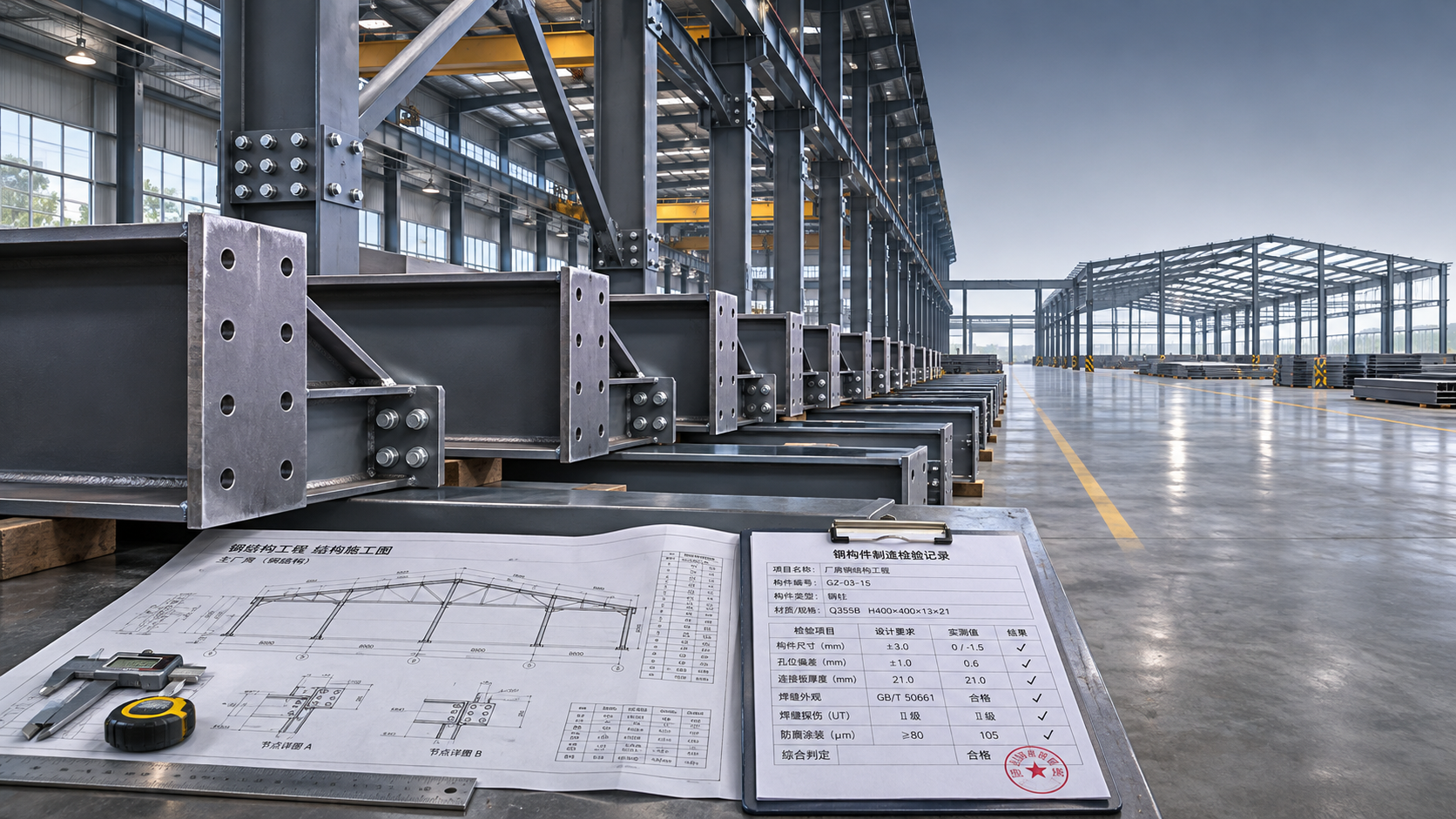
5. Fabrication and inspection: Look for accounts of material traceability, welding checks, dimensional inspections, coating verification, and any third-party inspection arranged for the order.
6. Packing and shipment: Determine whether members were marked clearly, packing lists matched the shipment, and documents arrived in time for customs clearance and site planning.
7. Installation support: Ask whether the supplier answered erection questions, supplied missing details, and provided practical assistance within the boundaries of its contractual obligations.
These steel building design process steps are not identical for every supplier. Request Keming’s actual workflow, approval points, deliverables, and responsibilities before comparing it with customer accounts.
How Should You Check Factory Capacity and Certifications?
Keming describes its operation as a prefabricated steel building manufacturer in China with a 120,000-square-meter plant and annual output capacity of 100,000 metric tons.
Those figures can help frame an initial discussion, but capacity claims do not establish available production slots or performance on your order. Ask for current, project-specific evidence.
Request a production schedule showing engineering approval, material procurement, fabrication, inspection, and dispatch milestones. Confirm whether the quoted lead time includes holidays and customer approval periods.
If practical, arrange a factory visit or an independent inspection. Ask to see relevant fabrication equipment, quality-control procedures, storage conditions, and the work areas proposed for your order.
The business also cites ISO, CE, AS-NZS, and ASTM credentials or compliance. These references cover different standards and processes, so their precise meaning needs verification.
Request current certificates and applicable test reports, including the issuing body, certificate number, scope, covered products or processes, and expiry date where relevant.
Verify certificates directly with the issuing or accredited certification body when possible. Confirm that the named legal entity and facility match the party responsible for your order.
ASTM and AS/NZS references may identify material or product standards rather than a factory-wide certification. CE marking applies to specified products and requirements, not every supplier activity.
Neither a certificate nor a stated annual output replaces project-specific checks. Confirm the required steel grade, welding standard, coating specification, inspection plan, and applicable local building code.
What Delivery and Contract Details Deserve Extra Attention?
Reviews should be read alongside the proposed contract. A buyer may report late delivery when the underlying issue was an undefined milestone or a different understanding of shipping terms.
Identify the applicable Incoterms rule and named place, such as the agreed port or destination. Confirm who arranges freight, insurance, customs clearance, unloading, and local transport.
Distinguish fabrication completion from vessel departure and site arrival. International shipping dates can change, so ask how delays are communicated and what contractual remedies apply.
Review the packing list and component identification requirements before production. For large projects, missing small components can delay erection even when most structural members arrive on time.
Define the process for shortages, damage, and nonconforming items. Specify notification deadlines, required evidence, replacement lead times, and responsibility for freight and site-related costs.
Check payment milestones against deliverables such as approved drawings, inspection results, and shipping documents. Make sure the contracting entity matches the verified business and bank account details.
For international purchases, review warranty terms, dispute resolution, governing law, and the practical cost of enforcement. Obtain qualified legal advice where the order value justifies it.
How Can You Compare Keming With Other Suppliers?
Use the same project brief for each shortlisted manufacturer. Include site location, intended use, dimensions, applicable codes, environmental exposure, delivery destination, and required documentation.
Compare complete scopes rather than headline prices. A lower offer may exclude engineering, protective coatings, secondary framing, shipping, local review, or installation support that another supplier includes.
Build a simple evaluation matrix covering verified references, technical compliance, production schedule, quality controls, communication, payment terms, and total delivered cost. Weight criteria according to project risk.
Consider the cost of delays and rework as well as the purchase price. A modestly cheaper structure may become more expensive if missing details interrupt site activities.
Ask each supplier to identify assumptions and exclusions in writing. Then request clarification on differences before negotiating, so that the final quotations describe comparable deliverables.
Keming states that it supplies factory-direct steel structures to more than 20 countries. Ask for relevant destination-specific examples and verify whether they involved similar codes and logistics.
Direct purchasing may reduce intermediary involvement, but it can also leave the buyer coordinating local engineering, customs, and erection. Confirm which services are included before making that assumption.
Conclusion: Turn Reviews Into Verifiable Evidence
The best place to begin is a combination of independent online sources and customer references for comparable projects. Neither ratings nor supplier testimonials should stand alone.
Use feedback to identify questions about design, fabrication, delivery, and after-sales support. Then verify the answers through project documents, certificate checks, contractual terms, and independent inspection where appropriate.
A suitable supplier should demonstrate that it can meet your specific technical and commercial requirements. The strongest decision rests on documented evidence, clear responsibilities, and comparable total costs.
We are more than happy to serve you here. If you have any question, please feel free to contact us.