
Related Posts
Online Message
What buyers should confirm before ordering steel structure design and fabrication
Steel Structure Design & Fabrication | Time : Aug 21, 2020 | Ke Ming Steel Structure Factory
It often starts with a familiar situation: a project schedule is moving, internal approval is almost complete, and the pressure is on to place the steel package order quickly. At that moment, many buyers are asked to compare quotations that seem similar on the surface. The drawings look acceptable, the lead time sounds reasonable, and the unit price becomes the easiest number to focus on. But in Steel Structure Design and Fabrication, the real risk usually hides in the details that are not obvious in the first review.
If those details are missed, the problem rarely stays on paper. It can appear later as mismatched connections, repeated drawing revisions, unclear material substitutions, coating disputes, transportation limits that were never discussed, or site installation delays caused by design assumptions that did not match real conditions. For anyone responsible for purchasing, that means extra coordination, internal questioning, and costs that are harder to control because they appear after the order is already placed.
A more reliable approach is to confirm the points that directly affect manufacturability, interface responsibility, and long-term use before the purchase order is issued. That does not mean making procurement overly technical. It means knowing which questions prevent expensive ambiguity.
01 When quotations look close, the missing scope is usually the first trap
One common mistake is comparing suppliers only by total amount and promised delivery date. In steel projects, two offers can appear close while covering very different scopes. One may include detailed connection design, shop drawings, surface treatment, marking, packing method, and coordination with erection requirements. Another may quote only a basic fabrication scope and leave critical design clarification for later.
Before ordering, ask for a scope breakdown in plain language. Not every item needs a long legal format, but the order should clearly state who is responsible for:
- Design basis and drawing depth
- Shop drawing preparation and revision handling
- Material grade confirmation and permitted substitutions
- Bolt, plate, and connection supply boundaries
- Surface treatment system
- Packing, loading, and transport assumptions
- Marking for site identification
- Documents delivered before production and before shipment
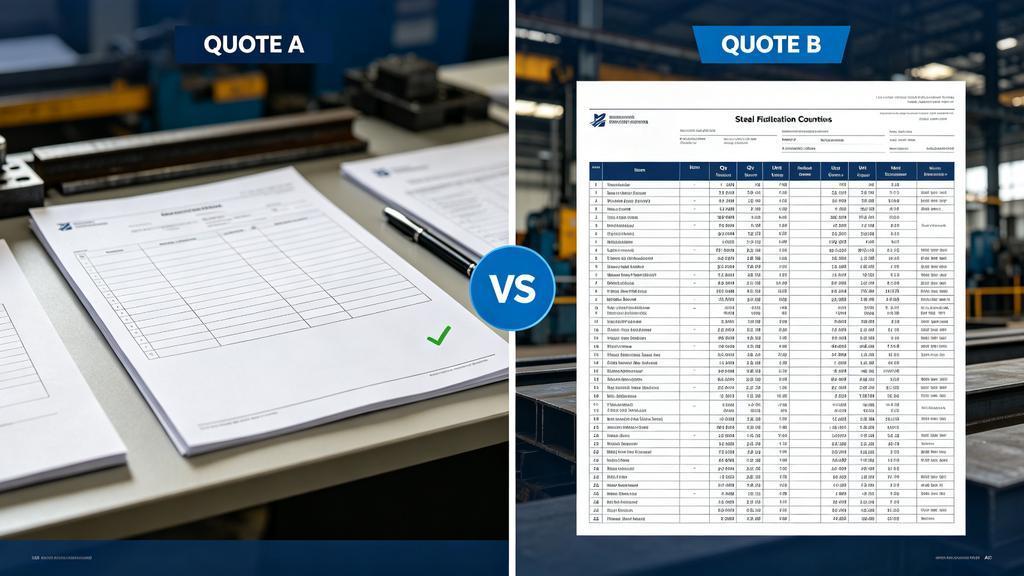
Many purchasing problems are not caused by a wrong supplier, but by an incomplete scope comparison. If you cannot line up the same scope across all quotations, the cheapest number is not yet a meaningful number.
02 Design accuracy should be confirmed as a purchasing issue, not only an engineering issue
Buyers are sometimes told that design review belongs entirely to the technical department. In practice, procurement still needs to confirm whether the design input is complete enough for fabrication to proceed without repeated change cycles. A supplier can only fabricate well if the design information is stable, coordinated, and detailed to the level required by the workshop.
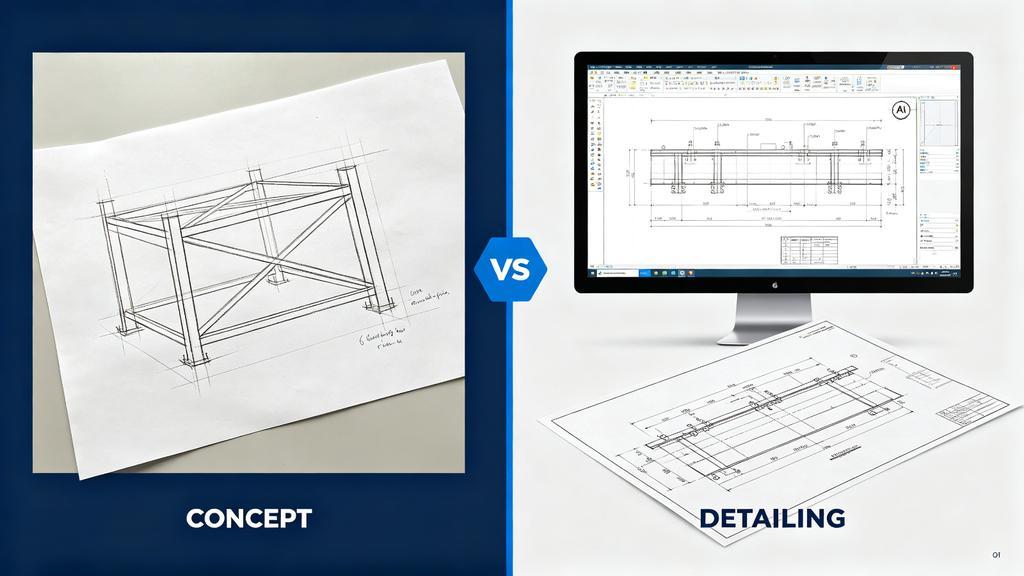
This is especially important when ordering Steel Structure Design and Fabrication together rather than sourcing them separately. Ask whether the design work being quoted includes only preliminary member sizing, or whether it also covers fabrication-ready detailing. There is a large difference between a concept suitable for tendering and a drawing package that supports cutting, drilling, welding, and fit-up.
Useful confirmation points include:
- whether design loads and project assumptions have been frozen for the quoted scope
- whether interface dimensions from civil works or other trades are already available
- whether openings, equipment supports, crane-related items, or mezzanine interfaces have been identified
- whether connection types are already decided or still subject to later review
- whether erection sequence assumptions affect member splitting or connection arrangement
If these points remain open, it is better to expose them before ordering than to discover them during detailing. Revision after procurement is not only a design issue. It changes material takeoff, nesting, production scheduling, and often freight planning as well.
03 Material standards need exact wording, not broad descriptions
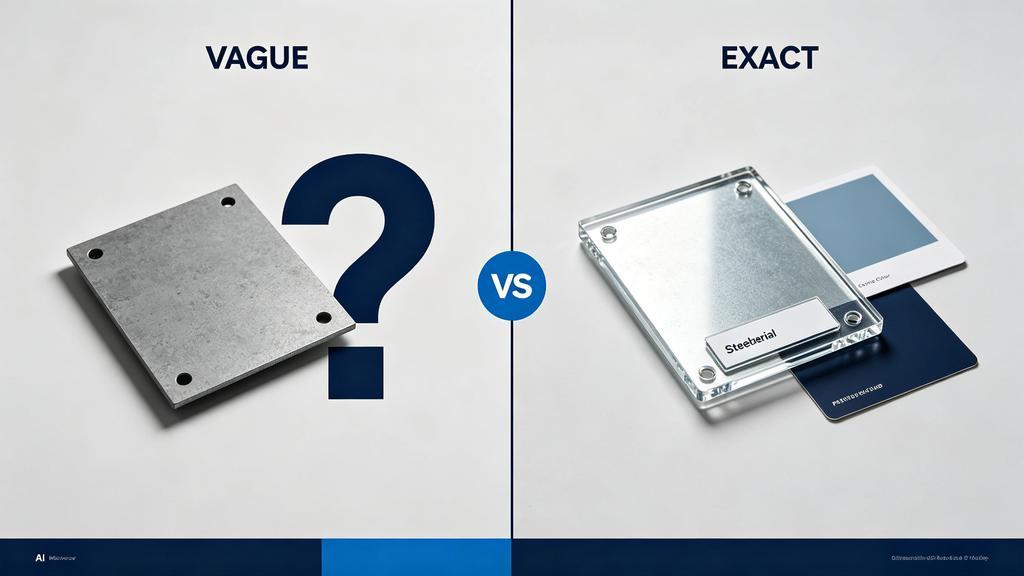
Another source of trouble is language such as “high-quality steel,” “standard coating,” or “equivalent material.” Those phrases sound acceptable in early communication, but they are too vague for an order. Buyers should confirm the exact material specification, thickness range, source expectations if relevant, and the rules for substitution approval.
The same applies to plates, sections, bolts, and welding consumables. If a project has performance expectations related to environment, finish, or service life, the purchase documents should reflect those requirements directly rather than relying on later interpretation. Even when the technical team prepares the specification, procurement should verify that the quotation acknowledges it without gaps or quiet exclusions.
Surface treatment deserves extra attention because it affects both cost and disputes. Confirm whether the quoted finish covers only primer, a full coating system, or another treatment requirement. Also ask what preparation method is assumed before coating and whether touch-up responsibility at site is defined. A coating line in a quotation is often short, but the consequences of misunderstanding it can be long.
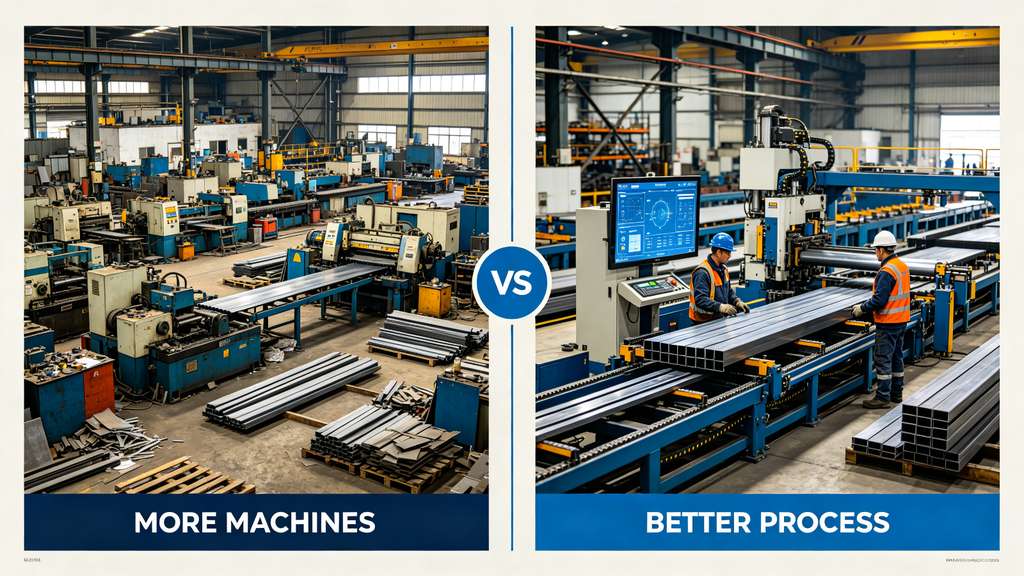
04 Factory capability is not just about machine count
When a supplier says they can handle the job, buyers usually want to know capacity and lead time. That matters, but it is only part of the picture. The more useful question is whether the factory can process this specific type of structure with the needed control points.
For example, a straightforward portal frame workshop and a project with more complicated nodes, built-up sections, or tight tolerance interfaces do not create the same fabrication demands. A capable factory should be able to explain how drawings are released to production, how member identification is managed, how dimensional checks are handled before shipment, and how non-standard details are communicated between engineering and workshop teams.
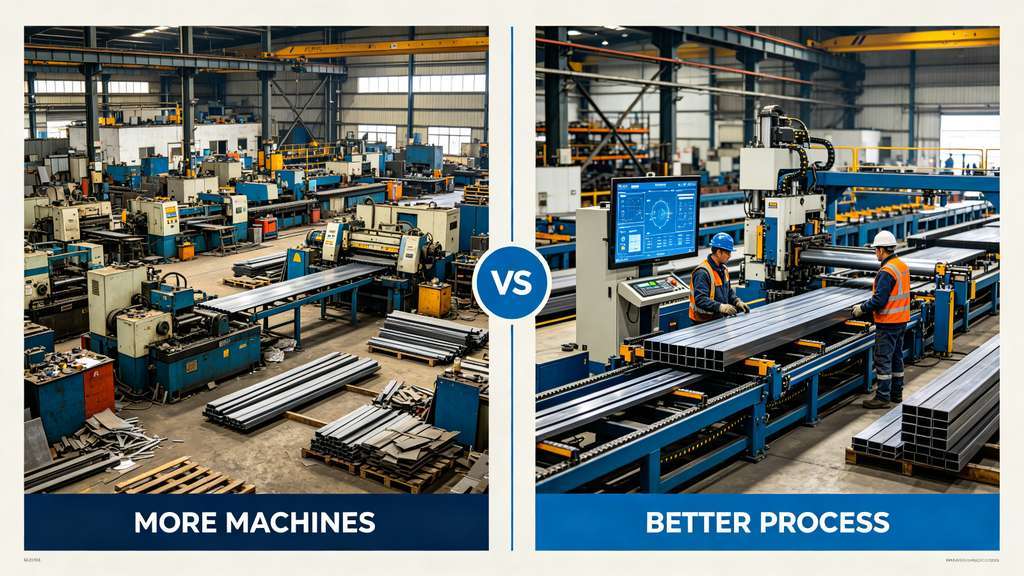
That is why some buyers prefer to review not only a company profile but also how the offered product is framed in practical terms. In some cases, a clearly defined option such as Essential Steel Workshop Core Features Only - No Hidden Costs is helpful because it makes scope discussion easier. The value is not in a slogan. It is in whether the proposed content is transparent enough for your team to compare against actual project needs.
Procurement takeaway
For procurement, the important point is this: a factory’s suitability should be judged by process clarity and scope fit, not by general statements alone.
05 Look closely at connection details before they become fabrication delays
Connection issues are one of the easiest places for hidden cost to develop. On the quotation sheet, steel tonnage may be visible, but connection complexity may not be. Yet the connection strategy affects fabrication hours, erection convenience, and the chance of site mismatch.
Before placing the order, confirm whether the following are already decided:
- shop-welded versus site-bolted philosophy
- bolt grades and hole assumptions
- base plate detail responsibility
- stiffener and splice arrangement
- special connection treatment around openings or equipment loads
If the supplier is expected to complete the detailing, ask how unresolved interfaces will be closed. If another consultant or trade must approve connection information, build that timing into the order process. It is better to hold a purchase for a needed clarification than to release fabrication on assumptions that cannot survive site reality.
06 Transport and installation limits should be discussed before drawings are frozen
Many procurement teams focus heavily on factory delivery date and less on whether fabricated members can be transported and installed efficiently. That gap can create expensive changes later. Member lengths, shipment grouping, lifting points, and site access conditions all affect how the steel should be detailed and fabricated.
If transportation restrictions exist, they should influence member splitting early. If the site has limited crane access or tight sequencing with other trades, that should also be reflected in the design and fabrication arrangement. Otherwise, the project may receive members that are technically fabricated correctly but inconvenient or costly to install.
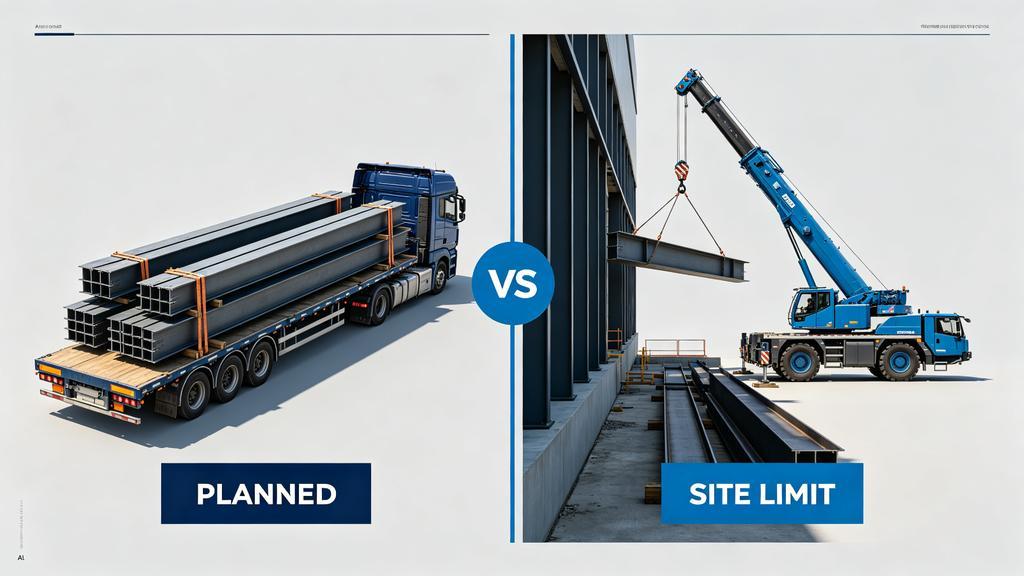
In practical review meetings, this is a good place to ask simple questions:
- What is the assumed maximum shippable member size?
- Will trial assembly be needed for any critical frames or special nodes?
- How will members be marked to match erection sequence?
- Are temporary supports or special lifting considerations expected?
These are not small operational details. They influence whether the fabrication package supports the actual project workflow.
07 Documents and revision control often decide whether the order stays manageable
In Steel Structure Design and Fabrication, confusion often grows when teams are using different drawing versions, incomplete approval records, or email-based clarifications that never make it into controlled documents. Buyers do not need to manage every technical file personally, but they should make document flow part of the purchasing conversation.
Before ordering, clarify which documents are required at each stage. That usually includes approved design references, shop drawings, material records as applicable to the order requirements, packing lists, and shipment identification documents. More importantly, confirm how revisions are issued and which version triggers production.
A simple but important purchasing habit is to avoid releasing manufacturing against “almost approved” drawings. When timing pressure is high, this is one of the first shortcuts people consider. It saves very little if later changes affect cut members or welded assemblies.
08 The safest supplier is not always the one who says yes fastest
Fast response is useful, but buyers should pay attention to the quality of the response. A supplier who asks specific follow-up questions about design basis, interfaces, coating scope, or transport assumptions may seem slower at first, but often indicates a more controlled process. By contrast, immediate agreement on every point can sometimes mean unresolved risk is simply being carried forward.
This is especially relevant when comparing multiple offers. If one quotation is noticeably lower, check whether the difference comes from process efficiency or from missing content. Review exclusions carefully. Also review assumptions that are not labeled as exclusions but still shift responsibility back to the buyer or another party.
If your project is a relatively standard workshop building, an option like Essential Steel Workshop Core Features Only - No Hidden Costs may be worth considering as a reference point during comparison, because it encourages a scope-based review instead of a price-only review. The main goal is still the same: make sure every offer is being judged on equivalent content.
09 Questions worth resolving before the purchase order is issued
A careful buyer does not need to master every engineering detail, but should leave the ordering stage with clear answers to a few practical questions:
- Are the design inputs complete enough for fabrication-ready detailing?
- Does the quotation define materials and coating without vague substitutes?
- Is the scope boundary clear for design, detailing, bolts, connections, packing, and transport?
- Can the factory explain how it will manage drawing release and dimensional control?
- Have site installation and transport limits been reflected in the member design?
- Is document revision control clear enough to avoid production from outdated files?
When these points are confirmed early, procurement becomes more predictable. Not perfect, because steel projects still involve coordination, but more predictable in the way that matters most: fewer surprises that appear only after fabrication starts.
The basic lesson
Before ordering, do not ask only, “How much?” and “How fast?” Ask whether the proposed package can move from design to workshop to site without hidden assumptions. That is usually where purchasing risk in steel work is either reduced or quietly accepted.
- Last One:Which Surface Treatment Is Most Reliable for Structural Steel in 2026?2026-02-06
- Next Article:No more articles
We are more than happy to serve you here. If you have any question, please feel free to contact us.