
News center
Related Posts
- ▶ Prefab vs. Conventional Warehouse Construction: Comparing Timelines
- ▶ Planning a Prefab Warehouse: Clear Span, Height and Loading Bays
- ▶ How Long Does It Take to Build a Commercial Steel Building?
Online Message
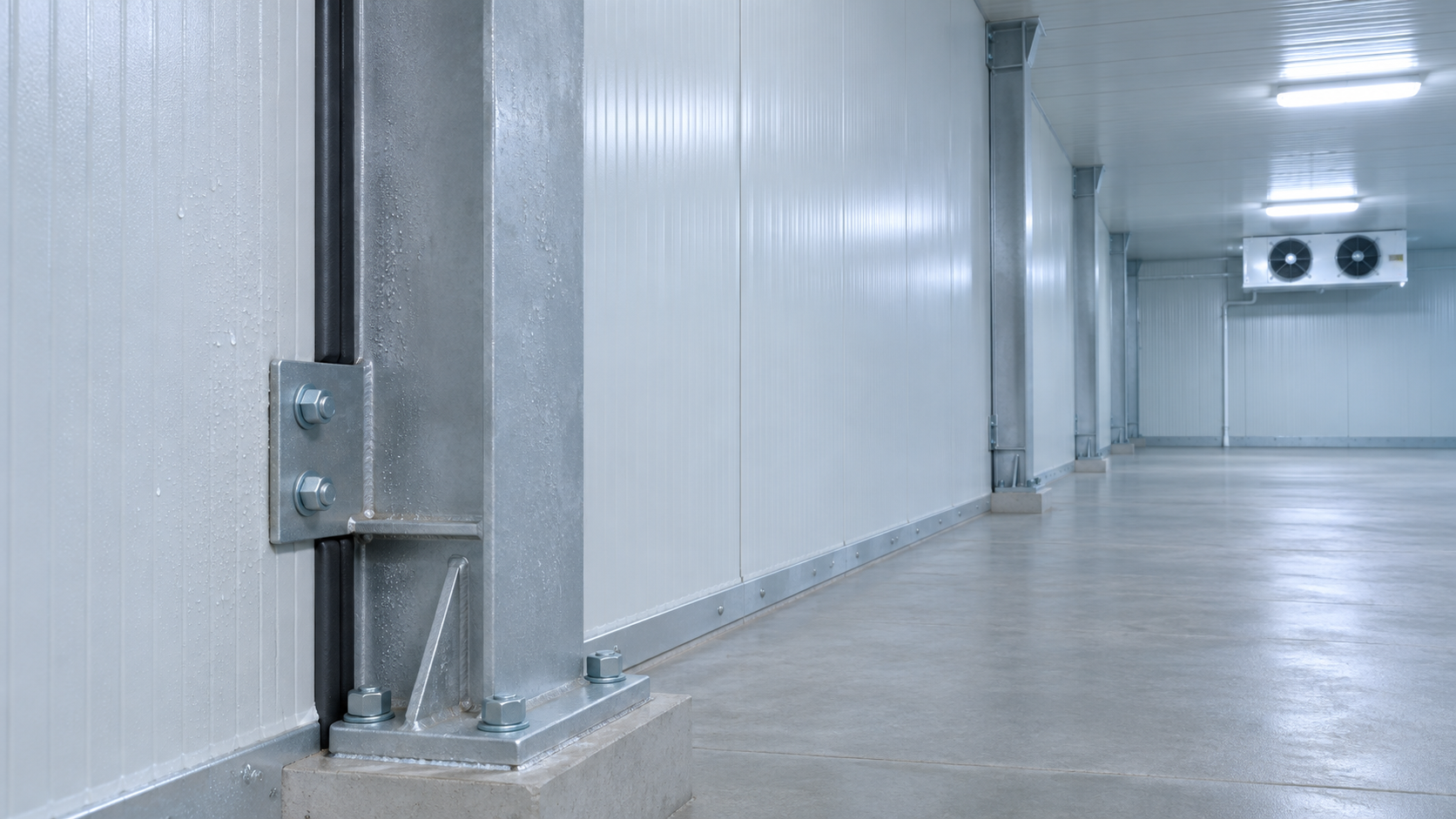
If you are searching for “what maintenance does cold storage steel structures require,” the answer starts with controlling moisture and inspecting the building envelope. Cold storage facilities expose steel frames, panels, seals, and connections to demanding temperature and humidity conditions. Regular inspections, timely repairs, and effective condensation control can help prevent corrosion, protect insulation performance, and extend the service life of the structure. This guide explains the key maintenance tasks and warning signs to watch for.
The practical challenge is that the steel frame and the cold-room envelope may not fail in the same place—or on the same schedule. A panel joint can admit warm, humid air long before corrosion becomes visible on a nearby connection. A useful maintenance program therefore looks beyond the obvious red rust and follows the path of water, air, and heat through the building.
How often should a cold storage steel building be inspected?
A sensible starting point is to combine routine operating checks with scheduled building inspections. Staff already working around loading docks and cold-room doors can notice damaged seals, new ice, or water on the floor during normal shifts. A designated maintenance person can then investigate recurring problems rather than treating each one as an isolated cleanup task.
Formal visual inspections are commonly planned at least annually, with more frequent checks in high-risk locations. The right interval depends on humidity, washdown practices, coastal exposure, door traffic, temperature cycles, and the condition of the building. Check manufacturer instructions, insurance requirements, and local rules when setting the schedule. After a roof leak, impact, severe weather event, or prolonged shutdown, an additional inspection is often warranted.
Keep a simple record of the location, photographs, observed condition, and repair date. “Ice at the north dock door every Monday morning” is more useful than a note saying “some condensation.” Patterns help distinguish a recurring air leak from an isolated event.
Where does moisture cause the most damage?
Warm, humid air entering a cold space can condense or freeze on cold surfaces. Water can also enter from outside through a roof defect or become trapped during cleaning. Once moisture reaches a concealed steel connection or becomes trapped against damaged coating, corrosion may progress without being noticed during a quick floor-level walk-through.
Pay particular attention to roof penetrations, panel joints, door frames, column bases, and transitions between the cold room and adjacent warmer areas. These are places where different materials meet, movement occurs, or damage is more likely. Look above suspended ceilings and around accessible service penetrations where it is safe to do so; a clean-looking wall surface does not prove that the cavity behind it is dry.
Ice is a clue, not a diagnosis. Frost at a door may point to a worn gasket, a door that does not close fully, or frequent traffic introducing humid air. Ice near a roof penetration may indicate an air-seal defect, a roof leak, or another moisture source. Removing the ice without finding the source usually leaves the underlying problem in place.
What should be checked on insulated panels and seals?
Inspect panel faces for dents, punctures, corrosion, separation, and signs of water staining. Forklift impacts near doors and low-level walls deserve prompt attention: a small break in the facing can expose insulation or compromise the joint, even when the panel still appears straight.
Check seals at panel joints, corners, floor junctions, and pipe or cable penetrations. Hardened, missing, or detached sealant can create a path for air and moisture. Door gaskets should make consistent contact when the door is closed; damaged hinges, tracks, or latches can prevent a good seal even when the gasket itself looks sound.
Do not assume that applying more sealant over a wet or dirty joint is a lasting repair. The correct approach depends on the panel system, the location of the air and vapor control layers, and the service temperature. Repairs may require drying, replacing damaged material, and reinstating the original continuity of the seal. In a freezer, an unsuitable repair material may lose flexibility or adhesion; confirm its application temperature and compatibility with the panel manufacturer.
How do you inspect the steel frame for corrosion?
Start with exposed columns, beams, bracing, base plates, and accessible connections. Look for coating damage, blistering, rust staining, standing water, and deposits that remain damp. Column bases are particularly vulnerable where floor washing, spills, or poor drainage allow water to collect. Exterior steel near the ground can face a different set of exposures from steel inside the refrigerated space, so inspect both sides of the building.
Surface rust on a small scratch and corrosion that has caused measurable metal loss are not the same maintenance issue. Minor coating damage may be repairable after suitable surface preparation and moisture control. Flaking steel, deformation, severe pitting, or corrosion around a load-bearing connection calls for assessment by a qualified structural professional before anyone assumes that cleaning and repainting will be enough.
Before specifying a touch-up coating, identify the existing protective system where possible. Galvanized and painted surfaces need compatible repair methods, and coating application may be restricted by surface temperature, condensation, ventilation, and food-safety controls. Recoating over a persistent leak is cosmetic maintenance at best.
Do bolts, welds, and connections need routine tightening?
They need inspection, but not indiscriminate tightening. Check accessible bolted connections for missing components, obvious movement, distortion, corrosion, or other signs of distress. Examine visible weld areas for cracking or damage, particularly where equipment loads or repeated impacts have been introduced.
A bolt that looks different from its neighbor is not automatically loose, and tightening a structural connection without understanding its design can create problems. If movement, missing fasteners, or damage is suspected, refer to the structural drawings and manufacturer’s instructions and involve a qualified engineer or competent contractor. Do not drill, weld, or attach new equipment to a structural member simply because it is nearby.
What about the roof, drainage, and refrigeration equipment?
A roof leak can travel along a member or collect above an insulated ceiling before it appears inside. Inspect roof coverings, flashings, gutters, downpipes, and penetrations for damage or blockage. Clear debris using safe access procedures, and look for recurring ponding or overflow after rain. Any roof repair should preserve the weather seal as well as the relevant air and vapor control layers below it.
Refrigeration maintenance is not the same as structural maintenance, but the two overlap. Condensate and defrost drains that leak or discharge incorrectly can introduce water near panels and steelwork. Check accessible drain routes and report recurring ice buildup around equipment. Refrigeration components and refrigerant-related work should be handled by appropriately qualified personnel.
Also review loads before installing replacement evaporators, pipework, walkways, or stored materials above a ceiling. A prefabricated frame was designed for particular load assumptions; an apparently modest addition can matter if it is concentrated at a connection or combines with existing loads. Confirm capacity against the project documents rather than relying on appearance.
Can cleaning and washdowns damage a cold storage structure?
Yes, especially when water or chemicals reach places that do not dry readily. Frequent washdown, aggressive cleaning products, and direct high-pressure spray at joints or damaged coatings can accelerate deterioration. Food-processing environments may require rigorous cleaning, but the method should be compatible with the building materials and the facility’s hygiene procedures.
Avoid directing spray into panel joints, electrical penetrations, or exposed insulation. Check the chemical supplier’s guidance for compatibility with coated steel, sealants, and other surfaces. Where water repeatedly pools at a column base, the lasting fix may involve drainage, a leak repair, or a change in cleaning practice—not simply another layer of paint.
When should a maintenance issue become an engineering review?
Escalate promptly when there is significant impact damage, a visibly bent or displaced member, suspected loss of steel thickness, a cracked connection, unusual roof or frame movement, or water damage that may conceal deterioration. Restrict access around an obviously damaged area where necessary, and follow the site’s safety procedures. A structural engineer can determine whether temporary support, detailed inspection, or repair design is needed.
For concealed moisture or suspected wet insulation, opening a small investigation area may be more informative than repeatedly patching the visible surface. Plan that work carefully: opening the envelope can disturb its air and vapor seals and may affect temperature control or hygiene. The repair needs to restore the complete assembly, not just cover the opening.
What documents make maintenance easier?
Keep the structural drawings, design load information, panel and coating specifications, connection details, and installation records together with the maintenance log. These documents help a contractor identify what can be repaired locally and what needs a designed replacement. They are especially useful when a facility changes use, adds equipment, or replaces doors and penetrations years after construction.
For a factory-supplied prefabricated building, ask the manufacturer for project-specific details and recommended maintenance information rather than relying on a generic steel-building checklist. A Chinese manufacturer with a 120,000 m² plant, stated output of 100,000 tonnes per year, and factory-direct supply to more than 20 countries may be accustomed to working with different project requirements. Even so, the applicable specifications, documentation, and acceptance criteria should be confirmed for the actual building and its destination.
The best next step is straightforward: walk the route that moisture would take—from roof and doors to panels, penetrations, and steel connections—and record anything that has changed. Investigate repeat wet spots before corrosion or insulation damage turns a small envelope repair into a structural one.
We are more than happy to serve you here. If you have any question, please feel free to contact us.