
News center
Related Posts
- ▶ Prefab vs. Conventional Warehouse Construction: Comparing Timelines
- ▶ Planning a Prefab Warehouse: Clear Span, Height and Loading Bays
- ▶ How Long Does It Take to Build a Commercial Steel Building?
Online Message
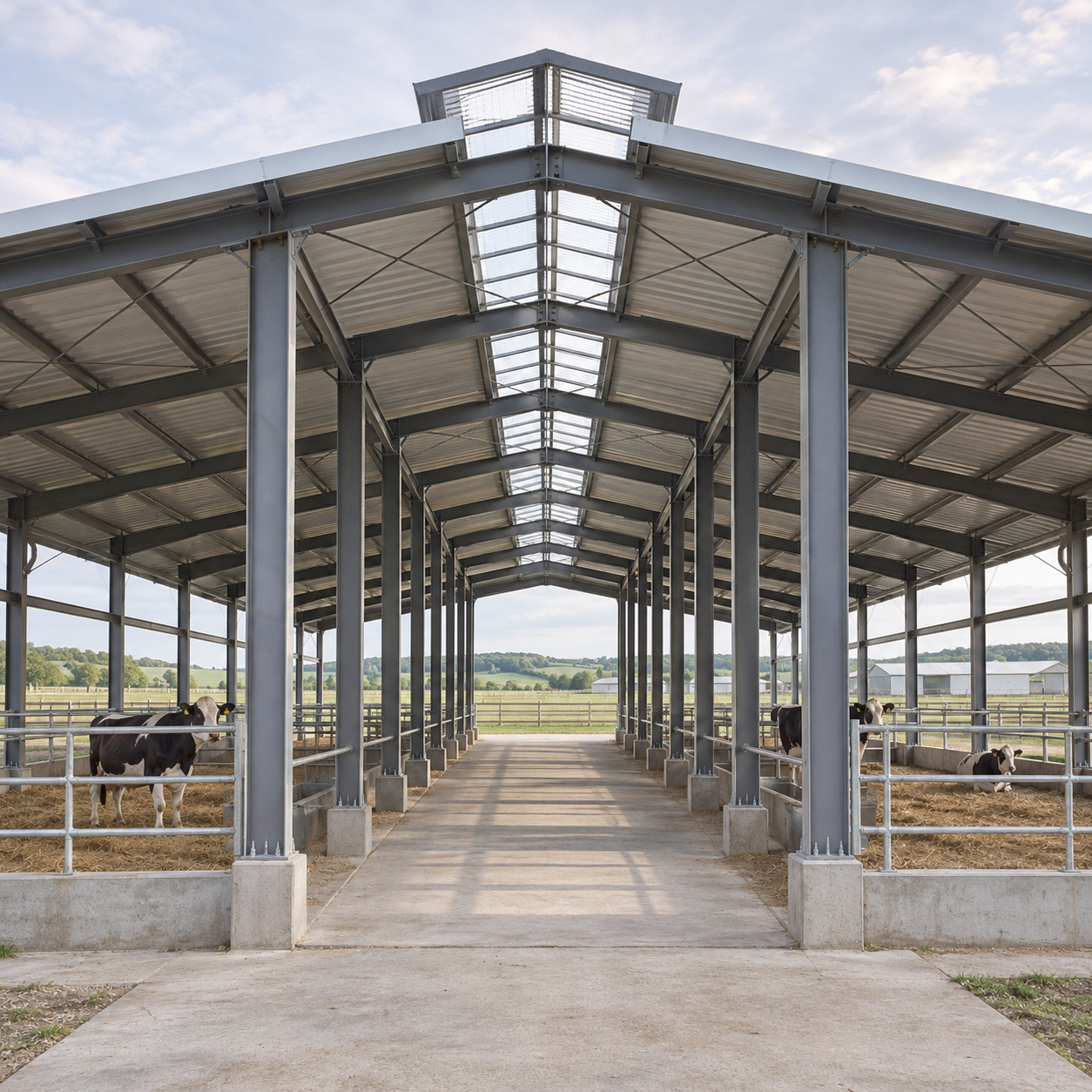
What is the typical lifespan of livestock steel buildings? Many well-designed and properly maintained structures can serve for 30 to 50 years or longer, depending on local conditions and how they are used. For livestock owners, corrosion protection, ventilation, manure exposure, and routine maintenance all affect long-term performance. The steel frame may remain sound long after roof sheets, fasteners, and other components need attention, so a useful lifespan estimate must look beyond the frame alone.
What does a 30- to 50-year lifespan actually mean?
That range is a practical planning estimate, not a guarantee. A steel cattle shelter on a well-drained, exposed site faces a different set of conditions from an enclosed pig or poultry house with warm, humid air and frequent washdowns. Even two buildings on the same farm can age differently if one has poor drainage or manure accumulating against its columns.
It also matters what is being measured. The primary frame is designed to carry the building’s loads; cladding, gutters, doors, sealants, and fixings perform different jobs and may need repair or replacement while the frame remains serviceable. A building can therefore stay in use for decades without every original component lasting that long.
Design life is not the same as a warranty, either. A design assumption depends on the specified loads, exposure, workmanship, and maintenance. A warranty is a contractual promise with its own conditions and exclusions. Ask to see both in writing rather than treating a projected service life as a guarantee against corrosion.
Where livestock buildings tend to deteriorate first
In agricultural buildings, the most troublesome areas are often close to the animals and the ground. Moist bedding, manure, urine, feed residue, and wash water can remain in contact with steel long after the rest of the building has dried. Ammonia and other contaminants can add to the corrosive environment, particularly where air movement is poor.
Column bases deserve special attention. A post surrounded by damp bedding or buried against a manure pile is difficult to inspect, and damage can develop where the steel meets the floor. Roof leaks are usually easier to notice; a deteriorating base plate hidden behind pen equipment is not.
Connections are another weak point. Dirt and moisture can collect around overlapping sheets, bolt heads, brackets, and horizontal ledges. Scratches made during erection or by loaders and gates may expose steel beneath the protective coating. The damage may begin locally, but it should not be dismissed simply because the rest of the building looks clean.
Coastal salt, industrial pollution, and fertilizer storage can increase exposure further. If a building will house animals as well as store chemicals or fertilizer, tell the designer: the combined environment may call for different protection than a basic open-sided shelter.
Ventilation protects more than the animals
Livestock release moisture and heat. When warm, damp air reaches a colder roof or wall surface, condensation can form and drip onto framing, insulation, bedding, and equipment. A building does not need an obvious leak to stay wet enough for corrosion to become a concern.
Good ventilation removes moisture and contaminated air while meeting the animals’ requirements. Depending on the building and climate, that may involve ridge and eave openings, sidewall openings, mechanical ventilation, or a combination. The right arrangement depends on stocking density, animal type, weather, and how the structure is operated. Simply leaving a large opening is not always the answer, especially where cold drafts or wind-driven rain are concerns.
Insulation and condensation control need to be considered with ventilation, not added as an afterthought. Poorly detailed insulation can conceal wet steel or trap moisture. During planning, ask how the roof assembly will manage condensation and how its concealed surfaces can be inspected.
Is galvanized steel enough for a livestock building?
Galvanizing can provide useful corrosion protection, but the word “galvanized” does not by itself establish how long every component will last. The coating specification, the steel component being protected, its exposure, and the quality of fabrication and installation all matter.
A roof purlin above a well-ventilated cattle barn and a column beside a wet manure channel should not automatically be treated as equivalent exposures. Depending on the project, designers may specify galvanized components, painted systems, or additional protection in particularly aggressive zones. The selected system must also be suitable for field repairs and compatible with adjoining materials.
Ask for the coating specification for the primary frame, secondary steel, cladding, and fasteners separately. These are not necessarily supplied with identical protection. Pay attention to cut edges, drilled holes, welded areas, and erection damage: a sound factory finish still needs a practical plan for touching up affected areas on site.
No coating compensates indefinitely for poor drainage or constant burial in wet waste. Physical separation from manure, a floor that sheds water, and accessible column bases may do more for long-term performance than choosing a heavier coating while leaving the underlying exposure unchanged.
Design details that are difficult to fix later
A prefabricated steel frame can be accurately manufactured, but its useful life still depends on the project design and installation. Before approving drawings, look closely at where the frame meets the foundations, how roof water is carried away, and whether equipment or pen layouts will obstruct inspection.
Foundation and floor levels are particularly important. Water should not collect around columns or flow back toward the building. Where curbs or other barriers separate livestock waste from steel, their detailing must still allow drainage and inspection; enclosing a base in a way that traps moisture can create a hidden problem.
Structural loading deserves equal attention. Wind, snow, seismic conditions where applicable, and the weight of suspended equipment must be accounted for under the requirements relevant to the building location. A frame designed for one site or use should not be assumed suitable for another. Adding a feed line, water tank, ventilation equipment, or solar array later can change the loads; have the proposed addition checked before attaching it to the structure.
For imported prefabricated buildings, confirm which design standard applies locally and who is responsible for checking the foundation, connections, and erection details. A Chinese factory with a 120,000 m² plant and stated annual output of 100,000 tonnes may have substantial manufacturing capacity, but capacity alone does not establish suitability for a particular farm. Likewise, claims relating to ISO, CE, AS/NZS, or ASTM should be checked against the specific documents, products, and scope relevant to the project. These labels are not interchangeable with local design approval.
A maintenance routine that catches problems early
A useful inspection starts at ground level, not with a quick look at the roof from the yard. Walk the perimeter and the animal areas, then inspect the structure after major storms or accidental impacts. Keep a simple record of photographs, locations, and repairs so that small changes are easier to identify over time.
- Check column bases and anchor areas for standing water, accumulated manure, coating failure, or visible steel loss. Clear obstructions carefully so the connection can be seen.
- Look for roof leaks, blocked gutters, loose sheets, damaged seals, and staining beneath fasteners. Trace the source rather than sealing an isolated drip without investigation.
- Inspect doors, gates, and vehicle routes for impact damage. Bent bracing or a damaged column may affect the structural load path even if the building remains in use.
- Check ventilation openings and equipment for blockages. Persistent condensation or a strong ammonia smell warrants investigation of both airflow and housekeeping.
- Clean corrosive deposits using methods compatible with the specified finishes, and repair damaged coatings according to the coating supplier’s instructions.
Do not pressure-wash blindly into laps, insulation, electrical equipment, or vulnerable connections. Cleaning should remove deposits without driving water into places that cannot dry. Similarly, avoid covering suspect corrosion with paint until the affected steel has been properly assessed and prepared.
When is repair no longer a routine maintenance job?
Surface rust on a small, accessible area may be manageable if it is identified early and repaired with an appropriate system. Flaking corrosion, noticeable section loss, distorted members, failed connections, or movement around a base are more serious signs. So are repeated leaks or coating failures in the same location: they suggest that the exposure or detailing has not been corrected.
Do not judge a structural member’s remaining capacity by appearance alone. Where steel has lost thickness or an animal, vehicle, storm, or fire has damaged the frame, a qualified structural engineer should assess it. The building may need restrictions on use, temporary support, repair, or replacement of individual components; the appropriate response depends on the damage and the loads involved.
A long service life is achievable, but it is earned through the details. Before buying or extending a livestock building, document the animals housed, cleaning methods, local exposure, intended equipment, and maintenance access. Those details give the designer and manufacturer a far better basis for specifying a frame that will remain practical to maintain over its working life.
We are more than happy to serve you here. If you have any question, please feel free to contact us.