
News center
Related Posts
- ▶ Prefab vs. Conventional Warehouse Construction: Comparing Timelines
- ▶ Planning a Prefab Warehouse: Clear Span, Height and Loading Bays
- ▶ How Long Does It Take to Build a Commercial Steel Building?
Online Message
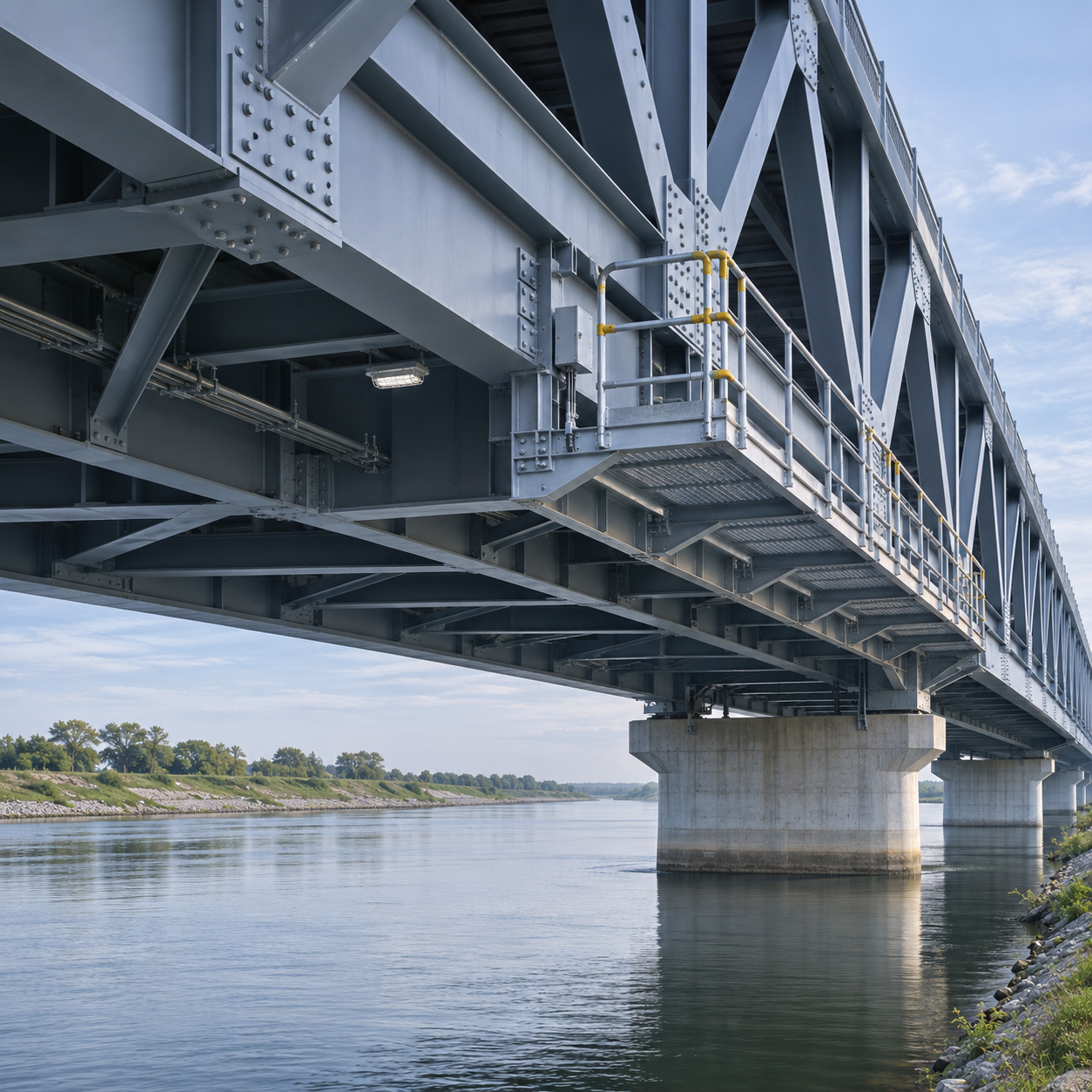
There is no single annual price for maintaining a steel bridge. A small, accessible bridge with sound coatings may need little beyond inspection, cleaning and drainage work in a given year. A bridge over a busy road, railway or waterway may cost much more to maintain because access, traffic control and environmental protection can outweigh the repair work itself.
The most useful way to estimate steel structure bridge maintenance cost is to separate predictable annual activities from occasional, larger projects such as repainting, bearing replacement or structural repairs. A budget based only on the previous year’s spending can miss these future costs and leave too little money when major work is needed.
What should a maintenance budget include?
Start with the bridge’s most recent inspection report and maintenance records. These establish what needs attention now, what is likely to need work later and where the condition is still uncertain. Build the estimate around the actual bridge rather than applying a generic cost per square meter.
These categories do not all recur at the same rate. Inspections and drainage cleaning may be planned as recurring operating expenses, while extensive coating work is usually treated as a periodic capital project. Keeping those budgets distinct makes it easier to see whether the bridge has enough funding for both immediate needs and future renewals.
Include engineering, procurement, mobilization and contingency as separate allowances where relevant. A contractor’s price for applying paint, for example, may not include the owner’s engineering review, lane-closure costs or the investigation needed to determine whether steel beneath the coating has lost thickness.
Why similar steel bridges can have very different costs
Access is often as important as bridge size. Work on a low pedestrian bridge with clear access from the ground may be straightforward. The same repair beneath a highway bridge can require suspended platforms, lane closures or work windows coordinated with other authorities. Over water, the contractor may also need specialized access and measures to prevent debris from entering the waterway.
Exposure affects both the amount of deterioration and the type of protection needed. Bridges exposed to coastal salt, deicing salts, persistent moisture or industrial contaminants may face more demanding corrosion conditions than bridges in sheltered, relatively dry locations. Water and debris trapped at joints, bearings and member connections can create localized problems even when the rest of the bridge appears sound.
The condition of the existing coating matters just as much as its age. Small, isolated defects on an otherwise well-adhered coating may be suitable for local repair. Widespread rusting, peeling or loss of adhesion can make a larger recoating project more practical. The chosen repair must be compatible with the existing coating and the service environment.
Bridge details also influence labor. Open surfaces are easier to inspect and clean than narrow gaps, complex connections and areas where different components meet. A bridge with many hard-to-reach details can require substantial preparation even if its overall steel area is modest.
Inspection costs: pay for visibility before pricing repairs
An inspection identifies the condition and location of defects; it does not automatically establish the full scope of repair. Flaking paint or rust staining may be visible from a distance, but the extent of corrosion can remain hidden beneath coating, debris or overlapping components. A closer examination may be needed before a reliable repair price can be prepared.
Depending on the suspected problem, a detailed investigation can involve removing small areas of coating, measuring remaining steel thickness or using nondestructive testing to investigate cracks. The inspection team may also need access equipment or traffic control. Those costs belong in the estimate even if the investigation finds that no immediate structural repair is necessary.
Inspection frequency and scope should follow the bridge’s governing requirements and the recommendations arising from its condition assessment. A bridge with known defects or unusual exposure may need closer attention than one in stable condition. If serious cracking, significant section loss or movement at a support is suspected, the appropriate next step is an engineering assessment, not a routine paint quotation.
Painting and corrosion protection: the largest variable for many bridges
Coating costs involve much more than the paint itself. The work can include cleaning, removing loose material, preparing the steel surface, applying the specified coating system and inspecting the finished work. Weather, temperature and access can affect how the work is scheduled and how much can be completed in a closure period.
Containment may also be a major expense. When old coatings are removed, debris must be controlled and handled according to the project’s environmental and safety requirements. Testing existing coatings before major removal can help determine the necessary controls and avoid pricing the work on an incomplete assumption.
Local coating repair is often appropriate when deterioration is limited and the surrounding system remains sound. It can reduce immediate expenditure and protect exposed steel while preserving coating that is still performing. It is less attractive when defects are widespread or when repeated patching leaves an inconsistent surface that is difficult to maintain.
Complete recoating has a higher initial cost, but it may allow the owner to address a failing system across the structure in one coordinated project. The decision depends on the condition and compatibility of the existing coating, the cost of access, environmental controls and the consequences of returning for repeated repairs. A low price per unit area does not necessarily mean a low project cost if it excludes containment or difficult details.
Not every steel bridge relies on the same protection strategy. Weathering steel, for example, develops a protective surface under suitable exposure conditions, but it is not maintenance-free. Trapped moisture, salts and debris can interfere with its performance. Drainage, detailing and the actual environment still need attention.
Small maintenance tasks that protect the budget
Cleaning drains and removing accumulated debris can prevent water from remaining against steel and flowing over bearings or connections. The work is usually simpler than repairing corrosion after it has developed, but it must reach the locations where material collects, not just the surfaces visible from the roadway.
Joints and bearings deserve particular attention because they allow the bridge to move and transfer loads as intended. A leaking joint can direct water and contaminants onto the steel below. A bearing that is obstructed or no longer functioning properly can create problems that coating repairs alone will not solve. Repair decisions should address the source of the water or movement problem as well as any resulting corrosion.
Fasteners, welds and connections should be assessed in the context of the bridge’s design and condition. Replacing a visibly deteriorated bolt without understanding its role, specification and surrounding connection may not restore the intended performance. Structural repairs should follow an engineer’s repair design and appropriate inspection procedures.
How to turn condition information into a usable budget
A practical plan begins by grouping work according to urgency and certainty. Immediate safety-related defects need a defined response. Known maintenance tasks can be scheduled and priced. Areas with incomplete information should be assigned an investigation allowance before a final repair scope is assumed.
- List the assets and defects. Identify steel members, coatings, joints, bearings, drainage and other components, together with their condition and location.
- Separate routine work from major renewal. Put recurring inspection and cleaning in the operating budget; plan substantial recoating and component replacement as future projects.
- Define the site constraints. Record access arrangements, traffic restrictions, working windows and environmental controls before requesting prices.
- Obtain comparable scopes. Ask contractors to identify what is included, especially surface preparation, containment, disposal, inspection and reinstatement.
- Allow for uncertainty. Use a contingency suited to the information available, recognizing that hidden steel condition and access difficulties can change the scope.
- Update the plan after each inspection or project. Actual condition and completed work provide a better basis for the next estimate than an unchanged annual allowance.
It is also useful to distinguish the owner’s direct expenditure from the wider cost of closing a route. A repair completed under a full closure may be cheaper for the contractor than one performed in short overnight windows, yet the closure may create unacceptable disruption. The lowest construction bid is not necessarily the best overall choice.
When repair costs lead to replacement questions
Repair is not automatically the economical option simply because the work is localized today. If a bridge has recurring defects, extensive corrosion, inadequate capacity for its intended use or components that are increasingly difficult to maintain, compare a properly scoped rehabilitation with replacement. The comparison should include remaining service needs, access, disruption and future maintenance, not just the initial construction price.
Replacement also has costs beyond supplying steel: design, foundations, removal of the existing bridge, transport, erection and approvals can all affect the decision. Prefabricated steel components may be useful where site work or closure time is constrained, but their suitability depends on the bridge design, transport route and erection conditions. Any proposed system still needs a project-specific maintenance and corrosion-protection plan.
The next step is a current condition assessment paired with a costed work scope. That gives the owner a clearer distinction between money needed for routine care, repairs that cannot wait and larger future projects that should be funded before deterioration makes them more disruptive.
We are more than happy to serve you here. If you have any question, please feel free to contact us.