
News center
Related Posts
- ▶ Prefab vs. Conventional Warehouse Construction: Comparing Timelines
- ▶ Planning a Prefab Warehouse: Clear Span, Height and Loading Bays
- ▶ How Long Does It Take to Build a Commercial Steel Building?
Online Message
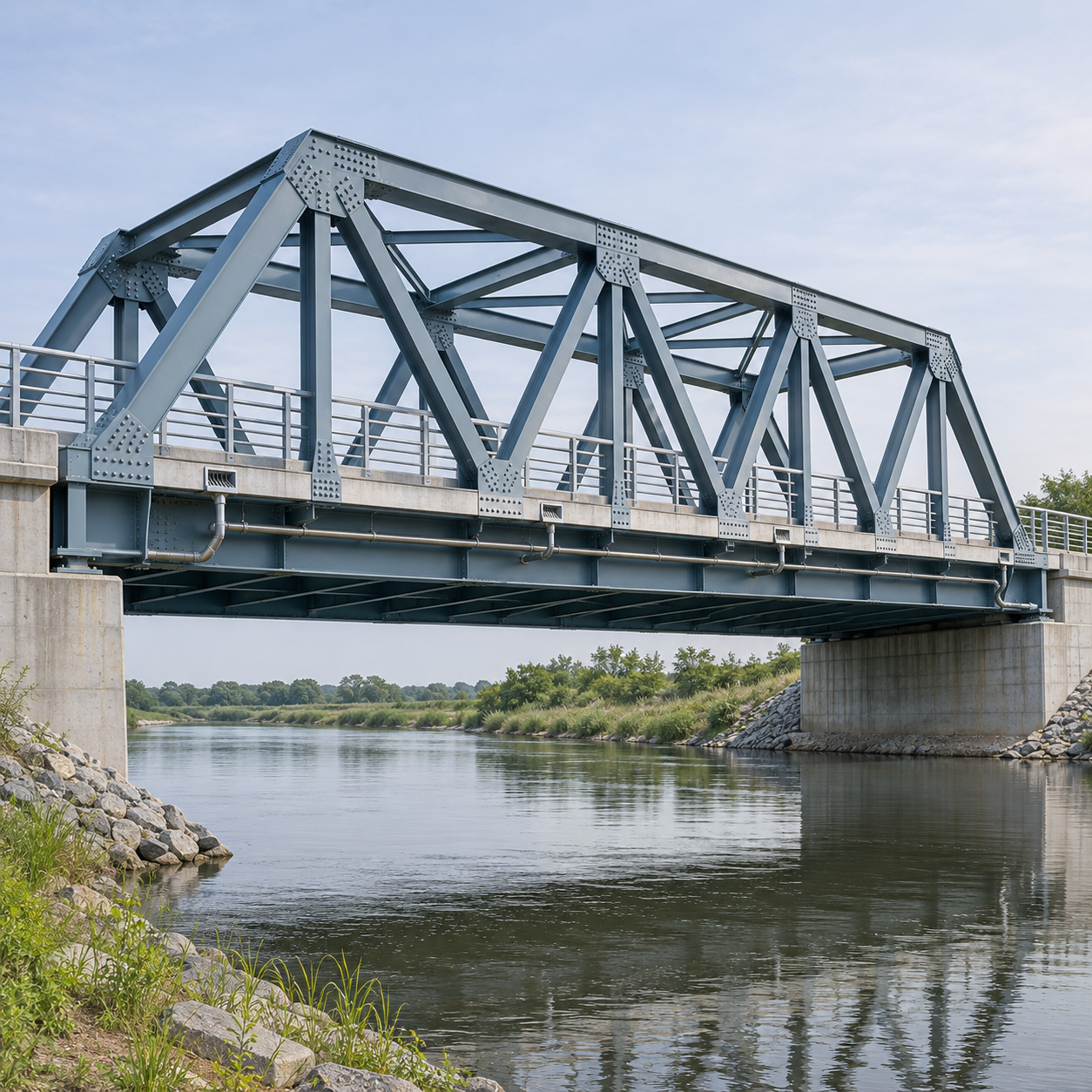
How long do steel structure bridges last? With appropriate design, protective coatings, regular inspections, and timely maintenance, many steel bridges can serve for 75 to 100 years or longer. Their actual lifespan, however, depends on traffic loads, climate, corrosion exposure, construction quality, and the care they receive over time.
For an owner comparing bridge materials or planning a replacement, that range raises another question: what has to happen for a steel bridge to reach it? The answer begins long before the first vehicle crosses. Drainage, fabrication details, protective systems, inspection access, and future maintenance all influence how well the structure ages.
Design life is not the same as actual service life
A bridge’s design life is the period used as a basis for engineering decisions under a specified set of assumptions. It is not an expiration date, nor is it a guarantee that every component will last that long without work. Actual service life is the time the bridge remains usable with acceptable safety and performance, including any repairs, rehabilitation, or component replacement.
A bridge designed for a long service life may need major intervention earlier than expected if water collects around its connections or traffic becomes heavier than anticipated. Conversely, a well-maintained bridge may remain in service beyond its original design period after assessment and strengthening.
It is also important to distinguish the steel structure from the rest of the bridge. Bearings, expansion joints, deck systems, drainage components, and coatings can deteriorate on different timelines. Replacing a joint or repairing a deck does not necessarily mean the main steel girders have reached the end of their useful life.
What determines how long a steel bridge lasts?
Water, salt, and corrosion exposure
Corrosion is one of the most familiar threats to steel bridge durability. The risk is particularly important where moisture remains on the steel, especially in combination with deicing salts, coastal spray, industrial contaminants, or debris that traps water.
Not every part of a bridge is equally exposed. Girder ends beneath leaking expansion joints, splash zones near roadways, and narrow spaces between members can deteriorate faster than open, dry areas. A bridge over a river may face a different exposure pattern from a highway overpass treated with road salt each winter.
Good drainage is therefore a structural concern, not just a housekeeping detail. Water should be directed away from vulnerable connections and bearings, and drainage outlets should remain accessible for cleaning. A coating cannot perform as intended indefinitely if water and debris are allowed to accumulate around it.
Traffic loads and fatigue
A bridge must carry the weight of vehicles, pedestrians, equipment, or rail traffic for which it is designed. Repeated loading also matters. As vehicles pass, some steel details experience cycles of stress that can eventually cause fatigue cracks, particularly at susceptible welded or connected details.
Fatigue does not depend only on the bridge’s age. Load magnitude, the number of cycles, structural geometry, fabrication quality, and the detail’s stress range all play a role. A bridge carrying a growing volume of heavy trucks may face different demands from those considered when it was designed.
That is why owners should retain load records where available, manage overweight vehicles, and reassess capacity when traffic patterns or regulations change. A bridge can look sound from the roadway while a critical detail requires close inspection.
Protective systems and their upkeep
Paint systems, galvanizing, and appropriately selected weathering steel can all contribute to corrosion protection. Their suitability depends on the environment and the bridge details; no single option is right for every site.
- Protective paint systems provide a barrier when surfaces are properly prepared, coatings are correctly applied, and damaged areas are repaired.
- Hot-dip galvanizing can protect suitable fabricated components, although component size, geometry, handling, and connection details need consideration.
- Weathering steel can form a protective surface layer under suitable conditions, but persistent wetness, salt exposure, or poor detailing may make it unsuitable.
When comparing options, consider the whole maintenance cycle rather than the initial application alone. Access for future touch-ups, traffic management during repainting, and environmental controls can all affect the practical cost of protection.
Design and fabrication details
Durability often depends on details that are easy to overlook in an early cost comparison. Crevices that retain moisture, joints located above vulnerable steelwork, and members that are difficult to inspect can create recurring problems throughout a bridge’s life.
Fabrication quality matters just as much. Weld preparation, fit-up, dimensional control, coating preparation, and documented inspection should follow the project’s approved specifications. Defects or damage introduced during fabrication, transport, or erection may become difficult and expensive to address once the bridge is in service.
Prefabrication can help by moving much of the work into a controlled factory environment. It does not, by itself, guarantee a longer-lasting bridge. The benefit depends on suitable design, competent fabrication, inspection, and careful site assembly.
Typical concerns at different stages of a bridge’s life
Bridge deterioration rarely follows a neat calendar. The table below is a practical way to think about changing maintenance needs, not a prediction for a particular structure.
A relatively young bridge in an aggressive environment may require more attention than an older bridge in a mild, dry location. Inspection findings should drive decisions, rather than age alone.
How inspection and maintenance extend steel bridge service life
Maintenance is most effective when it is planned before visible damage becomes widespread. Owners should follow the inspection intervals and procedures required by the relevant authority, while adjusting the scope to reflect the bridge’s design, condition, exposure, and traffic.
A practical inspection and maintenance program should address the following:
- Keep water moving. Remove debris from drains and channels, and investigate signs of water leaking onto steel members.
- Check protective coatings. Look for peeling, blistering, rust staining, and damage around edges, connections, and areas exposed to spray.
- Inspect critical details. Pay attention to welds, fasteners, girder ends, bearings, and areas where fatigue or corrosion is more likely.
- Record changes. Consistent photographs, measurements, and repair histories help engineers distinguish an isolated defect from an accelerating problem.
- Repair the cause as well as the symptom. Recoating corroded steel will have limited value if a leaking joint continues to soak the same area.
Some issues need more than a visual check. Engineers may specify detailed measurements or nondestructive testing where cracks, hidden deterioration, or uncertainty about a component’s condition warrant further investigation. Load restrictions or temporary closures may be necessary if safety cannot be confirmed.
Can an old steel bridge be repaired instead of replaced?
Often, yes—but the decision requires an engineering assessment. Localized corrosion can sometimes be repaired, damaged members can be reinforced or replaced, and fatigue-prone details may be treated or modified. Bearings, joints, decks, and protective systems can also be renewed without replacing the entire main structure.
Repair becomes less straightforward when deterioration is widespread, safe access is difficult, or the bridge no longer meets functional requirements. An older bridge may have insufficient width, clearance, or capacity for current use even if much of its steel remains serviceable.
A useful assessment weighs remaining structural capacity against the cost and disruption of repeated repairs. It should also consider future traffic, environmental exposure, and the consequences of closure. For a remote crossing with few alternatives, construction time and the ability to maintain access may carry as much weight as the initial price.
Planning a new steel bridge for a longer service life
Owners have the greatest influence over long-term durability during project planning. Before requesting fabrication prices, establish the intended use, applicable design requirements, expected exposure, and maintenance responsibilities. These choices affect both the structure and the way proposals should be compared.
For example, a bridge exposed to coastal salt may need a different protection strategy from an inland pedestrian crossing. A heavily trafficked road bridge may require particular attention to fatigue details, inspection access, and how maintenance work will affect traffic. In either case, specify how water will be kept away from critical areas and how components will be accessed later.
When reviewing a steel fabricator, ask for information relevant to the bridge scope:
- Experience and capability for the required member sizes, connections, welding, and tolerances.
- Material traceability and inspection documentation required by the project.
- Procedures for surface preparation, coating application, and repair of transport or erection damage.
- Trial assembly or dimensional verification where specified, especially for complex connections.
- Packaging, shipping, and erection interfaces that reduce handling damage and site rework.
- Evidence that the supplied work will meet the applicable project standards and local approval requirements.
A factory-direct prefabricated steel structure supplier may be able to support fabrication planning and international delivery, but bridge suitability should be verified for the specific project. General building certifications or production capacity alone do not establish compliance with bridge design, welding, or fabrication requirements. The project engineer and owner should confirm the relevant standards, qualifications, and inspection obligations before procurement.
Common questions about steel bridge lifespan
Do steel bridges last longer than concrete bridges?
Neither material has a universal lifespan advantage in every setting. Both steel and concrete bridges can provide long service when appropriately designed and maintained. Exposure, structural form, construction quality, and maintenance practice often matter more than a simple material comparison. A fair evaluation should include inspection, repair, and replacement costs over the intended service period.
Does rust mean a steel bridge is unsafe?
Not necessarily. Surface rust can range from a cosmetic or protective-system issue to an indication of more serious deterioration. The important questions are whether corrosion is active, how much steel section has been lost, and whether a critical component is affected. An engineer should assess significant corrosion rather than judging safety by appearance alone.
Can a steel bridge last more than 100 years?
Yes. Some steel bridges remain in use beyond a century, usually with ongoing inspection, maintenance, and rehabilitation. That does not mean every bridge will do so. The achievable life of a particular structure depends on its condition, loading, environment, and the feasibility of keeping it safe and functional.
The most useful answer to “how long do steel structure bridges last” is therefore not a single number. A 75- to 100-year service period can be a reasonable planning expectation for many projects, but reaching or exceeding it depends on decisions made at design, fabrication, and every maintenance cycle that follows.
We are more than happy to serve you here. If you have any question, please feel free to contact us.