
News center
Related Posts
- ▶ Prefab vs. Conventional Warehouse Construction: Comparing Timelines
- ▶ Planning a Prefab Warehouse: Clear Span, Height and Loading Bays
- ▶ How Long Does It Take to Build a Commercial Steel Building?
Online Message
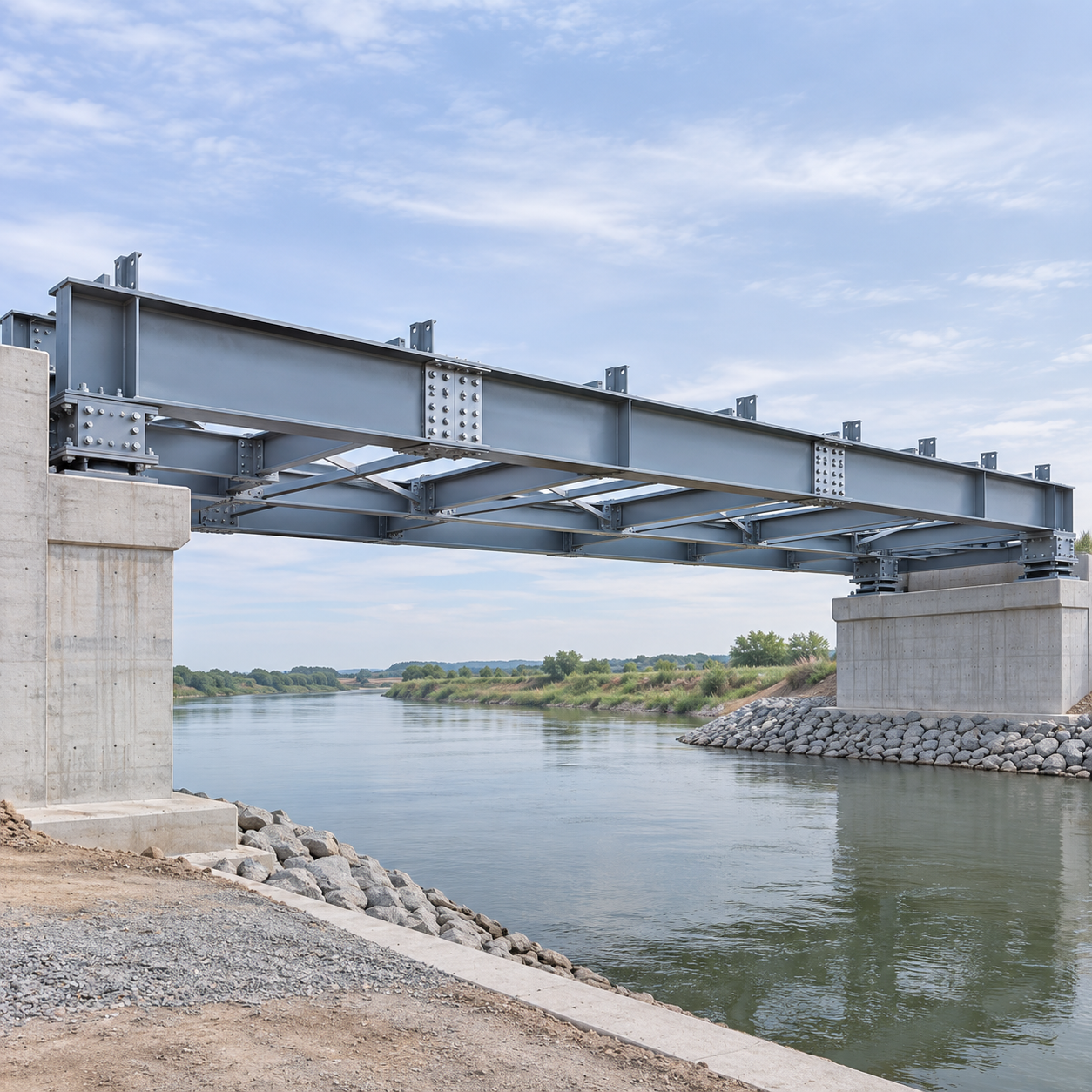
Yes. Steel bridge components can be prefabricated in a factory, transported to the crossing, and assembled on site. Depending on the design and transport limits, the delivered pieces may be individual girders, truss panels, deck units, or larger assembled modules.
For a crossing where road closures, work over water, or limited site access make extended construction difficult, prefabrication can shift substantial fabrication work away from the site. It does not eliminate foundations, lifting operations, inspections, or final connections, however. The practical question is not simply “can steel structure bridges be prefabricated?” but which parts can be made off site and delivered safely within the project’s constraints.
What arrives at the site?
A prefabricated steel bridge is not necessarily a complete bridge delivered in one piece. The extent of factory assembly varies with span, structural arrangement, delivery route, and available lifting equipment.
- Individual members: Girders, cross frames, bracing, and connection plates are fabricated separately. This approach gives the transport team smaller loads, but requires more assembly at the crossing.
- Truss panels or girder segments: Larger sections arrive with some shop connections completed. Field crews join the segments and install the remaining bracing and deck components.
- Bridge modules: Multiple members are assembled into wider or longer units before delivery. Modules can reduce field connections, although their size and weight place greater demands on transport and lifting.
- Complete short-span units: Some smaller bridges can be delivered largely assembled. Whether that is possible depends on the route, load limits, crane access, and the bridge’s finished dimensions.
The deck may be included in the prefabricated scope or completed separately. For example, steel girders might arrive ready for a cast-in-place concrete deck, precast deck panels, or another deck system specified by the engineer. Bearings, expansion joints, drainage, railings, and the running surface also need clear scope boundaries: a bridge that is structurally assembled is not automatically ready for traffic.
Where prefabrication changes the construction sequence
Conventional site-intensive construction places more cutting, fit-up, joining, and associated inspection at or near the crossing. With prefabrication, much of that work is carried out before the components arrive. Factory production can provide more controlled conditions for dimensional checks, welding, and coating, while foundation and abutment work may proceed at the site.
This overlap can shorten the period during which crews occupy the crossing. It is particularly relevant where a railway, waterway, active road, or sensitive area limits access. The actual saving depends on the design, fabrication schedule, delivery arrangements, site readiness, and weather. A late abutment or an inaccessible crane position can prevent prefabricated units from being installed when they arrive.
Moving work to a factory also changes rather than removes risk. Large modules must remain stable during handling and transport. Field joints must fit despite fabrication and erection tolerances. A design that looks efficient in the shop may become difficult to deliver if an assembled unit cannot pass a tight turn or reach the intended lifting position.
From design to installation
1. Define the crossing and the delivery limits together
The engineer first establishes the span arrangement, required clearances, design loads, deck system, foundation conditions, and applicable project requirements. At the same time, the team should investigate the route from the fabrication facility to the site. Road width, overhead restrictions, bridge load limits, permits, unloading space, and the final approach can determine the largest practical shipping unit.
These checks affect where the bridge is divided into transportable pieces. A longer girder may reduce the number of field splices, but it can also require a more restrictive route or a larger lifting arrangement. Conversely, smaller segments are easier to move but add connection work and inspection at the site.
2. Detail the members and their interfaces
Fabrication drawings translate the structural design into plates, sections, welds, holes, stiffeners, and connection details. The drawings should identify the intended field splices and show which items are supplied loose. They also need to coordinate the steelwork with bearings, anchorages, the deck, drainage, barriers, and any utilities carried by the bridge.
Camber and geometry deserve attention before cutting begins. A girder may be fabricated with a specified upward curvature to account for expected deflection under load. Hole positions and splice geometry must accommodate the approved geometry and erection sequence rather than relying on field crews to correct mismatches.
3. Fabricate, inspect, and prepare for shipment
Steel is cut, formed where necessary, fitted, and joined according to the approved drawings and fabrication requirements. Inspection can include material identification, dimensional checks, weld inspection, and testing specified for the relevant joints. Some assemblies may be trial-fitted in the shop to verify alignment or connection geometry before shipment; the extent of trial assembly should be agreed in the project documents.
Surface preparation and protective coating are also coordinated with fabrication. Areas near field welds, bolted faying surfaces, and lifting points may require special treatment or later coating work. After inspection, pieces are marked, supported, and secured for transport so that the installation team can identify their intended positions and avoid damage in transit.
4. Receive, erect, and complete the bridge
At the site, crews check the delivered pieces against shipping records and inspect for visible damage. The receiving supports, bearing positions, and relevant survey dimensions should be verified before a major lift. Components are then placed and connected in the approved sequence, using temporary bracing or supports where the erection design requires them.
Field work may include bolting or welding splices, installing cross frames, placing the deck, completing barriers and drainage, and repairing coating damaged by handling or connections. Final checks cover the items required by the project, such as alignment, connection inspection, bearing placement, and completion of protective systems. Opening the bridge depends on acceptance under the applicable project requirements, not merely on placing the steel.
Is a prefabricated steel bridge suitable for every crossing?
Many bridge forms can use prefabricated steel, including girder and truss arrangements for pedestrian, road, industrial, and other crossings. Suitability is determined by the design and logistics, not by the intended use alone. A pedestrian bridge can still be difficult to deliver if access is narrow; a larger road bridge may be practical when divided into manageable segments.
Prefabrication is often attractive when the site offers little room for fabrication, when work over an obstacle must be limited, or when a predictable erection sequence is important. It can also be useful where temporary access to the crossing is expensive or disruptive. These advantages are strongest when the foundation and approach works are ready before the steel arrives.
A site-built or less extensively assembled approach may be preferable when the delivery route cannot accommodate large pieces, lifting access is restricted, or the structure has geometry that makes large modules awkward to handle. Prefabricating individual members can still be viable in those circumstances; the decision is often about the degree of assembly, not a choice between an entirely factory-built bridge and no prefabrication.
Decisions that affect cost and schedule
The purchase price of fabricated steel is only one part of the comparison. A useful estimate includes fabrication, inspection, protective coatings, packing, transport permits, delivery, unloading, temporary works, cranes, field connections, deck construction, and the duration of site occupation. A larger module can reduce field labor while increasing shipping and lifting costs. The balance varies from one crossing to another.
Schedule comparisons should include design coordination and approval time as well as erection. Prefabrication allows some factory and site activities to run in parallel, but production cannot proceed reliably until connection details and interface dimensions are settled. Changes after fabrication starts can require rework, affect coating, or make a planned shipment unsuitable.
Storage is another practical constraint. Components delivered before the site is ready need stable supports, identification, and protection from damage. At a congested crossing, a delivery sequence matched to the erection plan may be more useful than sending all steel at once. That sequence should allow for the possibility that a lift is postponed and a shipment cannot be placed immediately.
Protecting the bridge after installation
Steel bridges need a corrosion protection strategy suited to their exposure and maintenance access. The specified system may involve protective coatings, galvanizing where appropriate, or other measures selected for the structure and environment. The choice affects fabrication details, shop handling, transport protection, and future inspection.
Pay particular attention to drainage and details that can trap water or debris. Field welds and damaged coating areas need preparation and repair in accordance with the specified system. Bolted joints may require controlled surface conditions before assembly, so they should not be coated indiscriminately just to make the shipment appear finished.
Access for future inspection should also be considered during design. A connection hidden behind a deck edge or an inaccessible bearing may be easy to overlook until maintenance is needed. Shop fabrication improves access to work before delivery, but it cannot replace a plan for inspecting the bridge throughout its service life.
What to confirm before placing an order
Provide prospective fabricators with the design basis or available drawings, site location, expected delivery route, required scope, and intended installation method. Ask them to identify proposed shipping splits and field connections rather than assuming that every quotation includes the same degree of assembly.
Review the inspection and documentation offered against the project specification. Relevant questions include how material traceability will be maintained, which weld examinations are included, whether trial assembly is required, and who is responsible for coating repairs after installation. The project’s governing standards and acceptance requirements should be stated explicitly; a general claim of certification is not a substitute for confirming the applicable scope and documentation.
Finally, establish responsibility for the interfaces. The steel fabricator, foundation contractor, deck supplier, transporter, and erector may each control dimensions or activities that affect the next party. Before fabrication begins, confirm who provides bearing and anchor details, who checks the route, who designs temporary lifting arrangements, and how field discrepancies will be resolved. Those agreements are often as important to a workable prefabricated bridge as the steel members themselves.
We are more than happy to serve you here. If you have any question, please feel free to contact us.