
News center
Related Posts
- ▶ Prefab vs. Conventional Warehouse Construction: Comparing Timelines
- ▶ Planning a Prefab Warehouse: Clear Span, Height and Loading Bays
- ▶ How Long Does It Take to Build a Commercial Steel Building?
Online Message
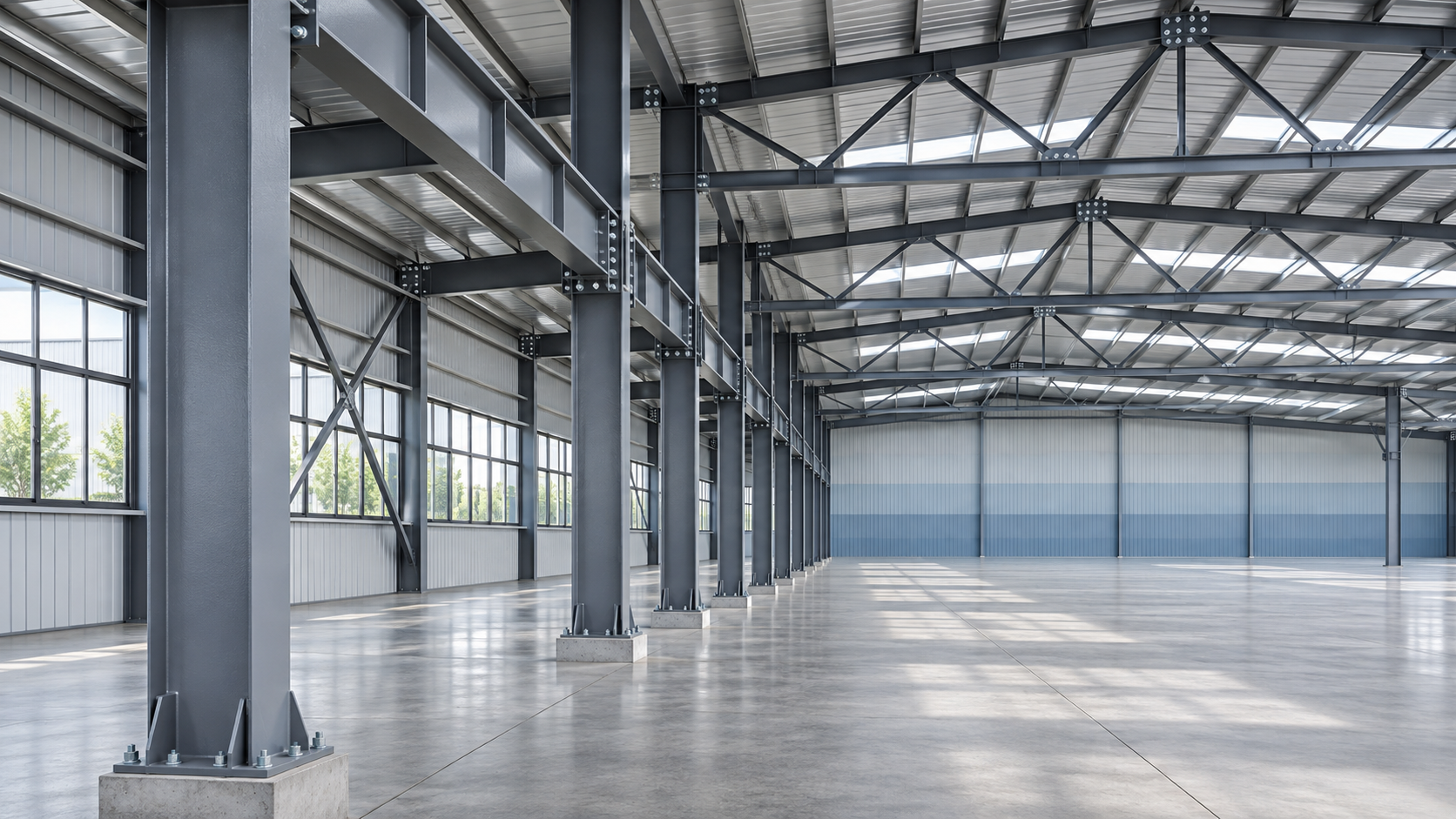
What is the lifespan of commercial steel structures? With appropriate design, protective coatings, and regular maintenance, many commercial steel buildings can serve their intended purpose for 50 years or more.
Actual service life depends on structural design, local climate, corrosion exposure, and building use. Understanding these factors helps owners plan for durability, maintenance, and long-term costs.
How Long Can a Commercial Steel Building Last?
A service life of 50 years or more is a reasonable planning expectation for many properly designed and maintained commercial steel buildings, but it is not a universal guarantee.
Some structures remain useful considerably longer when their primary frames are protected, inspections identify problems early, and owners repair or replace components as needed.
Others may require major intervention sooner, especially where moisture becomes trapped, protective coatings fail, corrosive chemicals are present, or the building is modified without engineering review.
For an owner, the important question is not simply how long steel can last. It is how long the complete building can meet its operational and financial requirements.
Before requesting quotations, specify the intended design working life and operating conditions. Ask the engineer and supplier to explain the assumptions behind their proposed protection and maintenance measures.
Design Life, Service Life, and Warranty: What Is the Difference?
Design working life is the period used for design planning under stated conditions and anticipated maintenance. It does not mean the building automatically becomes unsafe afterward.
Actual service life is the time the building remains fit for its intended use. It depends on construction quality, exposure, maintenance, loading, and changes in operational needs.
A warranty is a contractual promise covering defined products or defects for a stated period. Its duration is not necessarily the expected life of the structure.
For example, a roof coating warranty may exclude damage from standing water, chemicals, improper installation, or missed maintenance. Read the exclusions and claim requirements before comparing offers.
A building can also reach the end of its economic life before the frame fails. Changing access needs, energy standards, or tenant requirements may make continued use impractical.
Do All Parts of a Steel Building Last Equally Long?
No. The primary frame, roof covering, wall panels, fasteners, sealants, gutters, and doors experience different stresses and exposures, so they should not share one replacement assumption.
A protected main frame may remain serviceable for decades, while exposed roof components and weather seals may need maintenance or replacement much earlier, depending on their specification and environment.
Roof and wall cladding performance varies with coating type, local climate, installation quality, and manufacturer requirements. Ask for product-specific durability information rather than relying on generic lifespan claims.
Fasteners and their washers deserve attention because small leaks can allow moisture into insulation or connections. Incompatible metals can also accelerate local corrosion under suitable wet conditions.
Gutters, downpipes, and drainage outlets are particularly important. Blockages can cause overflow, standing water, and repeated wetting that damages adjacent cladding, foundations, and structural supports.
Plan financially for periodic repairs and eventual replacement of shorter-lived components. Replacing cladding or seals does not necessarily mean replacing the main steel frame.
What Most Affects the Lifespan of Commercial Steel Structures?
Structural Design and Future Loads
The building must be engineered for its location and intended use, including applicable wind, snow, seismic, and operational loads required by local regulations and the project brief.
Future loads matter too. Rooftop solar panels, suspended equipment, storage systems, cranes, or a later expansion may require structural capacity that was not included in the original design.
Tell the design team about foreseeable changes before fabrication. Retrofitting an undersized frame or connection can interrupt operations and cost more than providing capacity during initial construction.
Moisture and Corrosion Exposure
Water is a major durability concern because unprotected carbon steel can corrode when exposed to moisture and oxygen. Salt and certain pollutants can increase corrosion rates.
Coastal locations, industrial emissions, road deicing salts, and chemical processes can create more demanding conditions than a dry inland warehouse. Indoor environments can also be corrosive.
Condensation is easy to overlook. Temperature differences, inadequate ventilation, and poorly detailed insulation can leave hidden surfaces repeatedly damp even when the roof appears watertight.
Good detailing helps water drain and allows important surfaces to be inspected. Pay particular attention to base plates, roof penetrations, connection pockets, and cladding interfaces.
Protective Coatings and Fire Protection
Paint systems and galvanizing can protect steel against corrosion when selected and applied for the expected exposure. Neither eliminates the need for inspection and maintenance.
The right specification depends on surface preparation, coating thickness, access for future repairs, local conditions, and compatibility between the coating system and connected materials.
Fire protection is a separate design issue. Steel loses strength as temperature rises, so applicable codes may require measures such as fire-resistant boards, spray-applied protection, or intumescent coatings.
Ask the project engineer to identify the required fire resistance and the maintenance obligations for the selected system. Do not assume a corrosion coating provides fire protection.
Fabrication and Installation Quality
Accurate fabrication supports fit, load transfer, and reliable assembly. Poor welds, damaged coatings, incorrect bolts, and site modifications can undermine an otherwise sound design.
Request documented quality controls for materials, welding, dimensional tolerances, coating application, and installation. The exact inspections should match the project specifications and applicable standards.
During construction, damaged protective coatings should be repaired using an approved method. Connections, drainage details, and roof penetrations should be checked before the building is handed over.
How Should Owners Maintain a Commercial Steel Building?
Start with the engineer's recommendations, product warranties, local requirements, and actual exposure conditions. A practical maintenance plan assigns responsibility, inspection dates, reporting procedures, and repair priorities.
Inspect the building at least annually as a starting point, and after significant storms, impacts, leaks, or other unusual events. Harsh environments may require more frequent checks.
Check the roof and drainage. Look for debris, ponding, loose panels, damaged flashings, blocked gutters, and failed sealants. Arrange safe access with trained personnel.
Inspect structural steel and connections. Look for rust, coating damage, deformation, missing or loose fasteners, and signs of water accumulation around columns and base plates.
Review the building interior. Check for condensation, leaks, damaged insulation, and corrosion near wet processes or stored chemicals. Investigate recurring moisture rather than treating stains alone.
Protect fire systems and finishes. Check that fire protection remains intact and that repairs or alterations have not compromised the specified assembly or its required performance.
Keep dated photographs, inspection reports, repair records, and coating information. These records help owners identify recurring problems and give future contractors a clearer maintenance history.
Not every defect requires structural replacement, but visible distortion, significant section loss, damaged connections, or uncertain load capacity warrants prompt assessment by a qualified structural engineer.
When Should You Repair, Reinforce, or Replace?
Repair is often appropriate for localized coating damage, isolated leaks, or replaceable components when the underlying structure remains sound and the cause can be corrected.
Reinforcement may be appropriate when a building needs to support changed loads or when an engineer determines that localized deterioration can be addressed reliably.
Replacement may be worth evaluating when widespread corrosion, repeated water damage, major code-driven alterations, or unsuitable building dimensions make continued investment difficult to justify.
Compare options using more than initial construction cost. Include engineering, repairs, business interruption, energy performance, financing, future maintenance, and the expected remaining period of use.
Commission an independent condition assessment when the decision is significant. Testing or measurement may be needed to determine remaining steel thickness, connection condition, and actual structural capacity.
How Can Buyers Compare Steel Building Quotations?
A lower initial price does not necessarily mean a lower lifetime cost. Quotations are meaningful only when they cover comparable design assumptions, materials, protective systems, and responsibilities.
Ask each supplier to state the applicable design codes, specified loads, intended building use, steel grades, coating systems, cladding specifications, and exclusions in writing.
Confirm who is responsible for local engineering approval, foundations, installation, transport, unloading, and repairs to coatings damaged during assembly. These items can materially change total cost.
For coastal or industrial projects, provide a clear exposure description and request a project-specific corrosion protection proposal. Ask how coating condition will be inspected and maintained.
Review product warranties alongside maintenance requirements and exclusions. A longer warranty is useful only when its coverage fits the actual environment and the owner's maintenance capabilities.
When sourcing internationally, verify that the proposed design and products meet requirements in the destination jurisdiction. Supplier credentials should be checked against the specific documents and scope involved.
A factory-direct manufacturer may offer production capacity and quality documentation, but buyers should still assess project-specific engineering, traceability, delivery arrangements, and support after installation.
Key Takeaway
Many commercial steel structures can remain useful for 50 years or more, but no single figure applies to every building or every component.
Specify the intended working life, design for the actual environment and foreseeable loads, and budget for inspections and component replacement. These decisions make long-term performance more predictable.
We are more than happy to serve you here. If you have any question, please feel free to contact us.