
News center
Related Posts
- ▶ Prefab vs. Conventional Warehouse Construction: Comparing Timelines
- ▶ Planning a Prefab Warehouse: Clear Span, Height and Loading Bays
- ▶ How Long Does It Take to Build a Commercial Steel Building?
Online Message
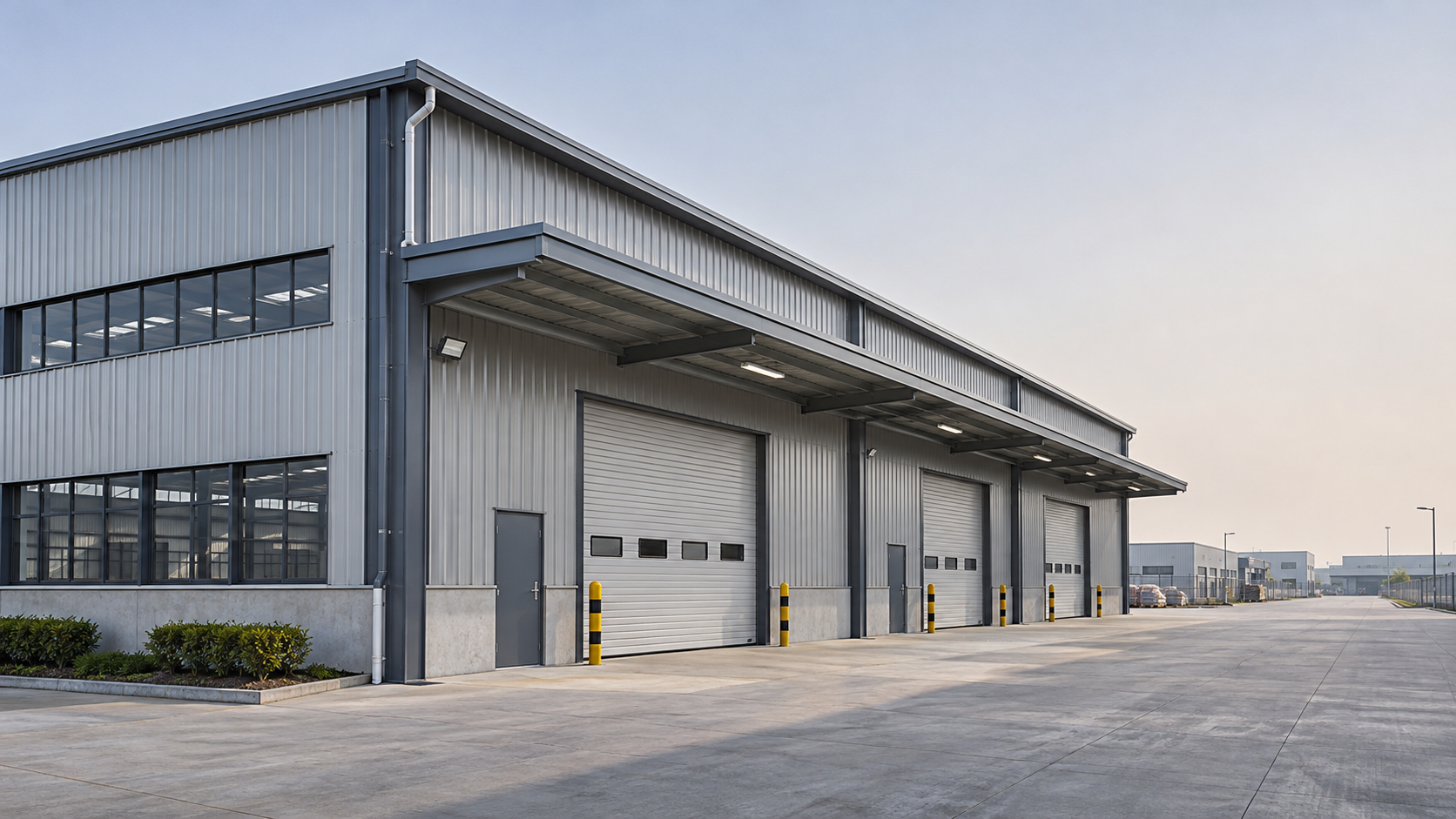
Do commercial steel structures need special insurance? Not necessarily. A completed steel building may be insured under a standard commercial property policy, provided the insurer accepts its construction, location and use. However, the policy must describe the building accurately and cover the relevant causes of loss; a standard policy is not automatically sufficient for every steel structure.
The distinction becomes important when a prefabricated building is being shipped, erected or fitted out, or when an operating facility contains valuable machinery or inventory. Damage during those stages may fall outside the owner’s ordinary property policy. Wind, flood, equipment breakdown and lost income can also require separate coverage, endorsements or specific confirmation.
Does a steel building need a separate type of property policy?
Steel framing alone does not usually require a policy created exclusively for steel buildings. Commercial property insurance can cover the building as part of the insured premises, subject to its terms. The insurer will generally want to know what the structure is made of, what happens inside it and how much it would cost to repair or replace.
That does not mean every part of the premises is automatically included. Check the property description and policy schedule for the main structure, foundations, exterior cladding, roof, interior fit-out and any detached additions. Some policies treat particular items differently or apply separate limits. A canopy, loading dock or freestanding storage building should not be assumed to be covered simply because it is on the same site.
Ownership also matters. A business leasing a steel building may need coverage for its own contents and improvements, while the landlord insures the structure. The lease should be checked against both parties’ policies so that responsibilities for the roof, installed equipment and repairs are not left unclear.
Which risks can leave a steel structure underinsured?
Fire resistance is not the same as fire coverage
Steel is noncombustible, but a steel building can still suffer substantial fire damage. Heat can affect structural members, and the building may contain combustible insulation, stored goods, packaging or equipment. The insurer may consider the entire assembly and occupancy, not just the frame.
When requesting a quote, identify the roof and wall systems, insulation, fire protection and intended operations. A change from general storage to a process involving heat or combustible materials can alter the risk. Tell the insurer before the use changes, rather than assuming that the original description remains adequate.
Wind, snow and water damage
Location and design exposure influence what coverage is available and how deductibles are applied. High winds may damage roof panels, doors or cladding; heavy snow may overload a roof if conditions exceed its capacity. Whether a particular event is covered depends on the policy wording, the circumstances and any applicable exclusions.
Water is especially easy to misunderstand. Damage caused by rain entering through a storm-damaged roof may be treated differently from flooding, groundwater or water entering through an opening that was already defective. Flood coverage may require a separate policy or endorsement. Ask the insurer to explain the relevant definitions and deductibles for the site, rather than relying on the general phrase “water damage.”
Routine wear, corrosion, poor maintenance and construction defects are commonly excluded or limited, although ensuing damage may be treated differently depending on the policy. Insurance is not a substitute for inspecting drainage, fasteners, sealants and protective coatings. Keep maintenance records and address deterioration promptly, especially where moisture or corrosive conditions are present.
Is the structure covered while it is being built?
Do not assume that the completed-building policy begins when the first steel components arrive. Construction introduces exposures that change as materials move from storage to transit, unloading, erection and installation. A builders risk or course-of-construction policy may be appropriate for physical loss or damage during the project, subject to its covered property, locations, exclusions and policy period.
Before work starts, establish who is responsible for arranging that coverage: the owner, general contractor or another party. The contract and the policy should be reviewed together. A contractual obligation to insure the work does not by itself prove that a policy has been issued or that all parties have the protection they expect.
Pay particular attention to these transition points:
- Materials in transit: Confirm whether steel components are insured while being transported and who bears the risk at each delivery stage. Marine cargo or transit coverage may be needed, particularly for international shipments.
- Off-site storage: Ask whether materials held at a supplier’s yard, a port or another temporary location are included and whether a location-specific limit applies.
- Unloading and erection: Check coverage for components and partially completed work, including any conditions relating to lifting, temporary bracing or severe weather.
- Testing and commissioning: Installed equipment may present risks not covered by the construction policy, or coverage may change when testing begins.
- Occupancy and handover: Find out exactly when construction coverage ends and when permanent property coverage attaches. The dates should overlap or otherwise connect without an unintended gap.
Builders risk generally concerns damage to the insured project property. It is not a replacement for liability insurance covering claims by third parties. Contractors may also need their own liability, workers’ compensation or equivalent coverages, depending on the contract and local requirements.
What should the insured value include?
The purchase price of a steel package is not necessarily the amount needed to restore a completed building. Replacement may involve demolition, debris removal, foundations, cladding, interior work, labor, professional services and transport. Some of these costs may be subject to separate limits or policy conditions, so they should be discussed individually rather than silently added to a single figure.
Use a current rebuild estimate that reflects the building as completed, including subsequent additions and improvements. Review the valuation basis: replacement cost and actual cash value are not interchangeable, and settlement may depend on policy conditions. Where the policy includes a coinsurance clause or another insurance-to-value requirement, an insufficient limit can affect the payment for a partial loss as well as a total loss.
Also check whether code upgrades are included. Rebuilding after a covered loss may trigger requirements that did not apply when the building was first constructed. Ordinance or law coverage, where available, may address certain additional costs, but its scope and limits vary. It should not be assumed to pay for every upgrade or for work unrelated to a covered loss.
Are machinery, inventory and lost income included?
Coverage for the building does not automatically provide adequate protection for what is inside it. Production machinery, stock, tools and office equipment may need to be declared as business personal property or under other appropriate coverage. Review limits by location and confirm how the policy treats property belonging to customers or suppliers.
A machine can stop working without the building itself being damaged by an insured event. Equipment breakdown coverage may address certain sudden mechanical or electrical failures, subject to its terms; ordinary maintenance problems and wear are not necessarily covered. Check whether the policy includes the equipment that is critical to the operation and any related repair or replacement costs.
Business interruption coverage addresses a different problem: income loss and certain continuing expenses when operations are disrupted by a covered event. It commonly depends on a covered cause of physical loss or damage, and it may have a waiting period, a time limit and a separate limit of insurance. Extra expense coverage may help with qualifying costs to continue operations elsewhere. Neither should be assumed to cover every shutdown, supply delay or power outage.
What information will an insurer need?
An accurate submission helps the insurer assess the building and reduces the chance that important features are omitted from the policy. Gather the following before comparing quotations:
- The site address, building dimensions, occupancy and any planned hazardous processes or storage.
- Structural drawings or specifications showing the frame, roof, wall cladding, insulation and major openings.
- Details of fire protection, drainage, security and relevant local wind, snow or flood exposure.
- The construction schedule, transit route, storage locations and anticipated handover date for a new project.
- A rebuild estimate, contents values and an assessment of the income and expenses at risk during a shutdown.
For an imported prefabricated structure, share available design and material documentation with the insurer and the local project team. Confirm whether local approval, installation records or other evidence is needed for underwriting. A manufacturer’s specification can describe the components, but it does not determine coverage or replace an assessment of the completed building and its use.
How should competing quotes be compared?
Start with the same declared property, values and operations. Then compare covered causes of loss, exclusions, deductibles, sublimits and valuation terms—not just the premium. One quote may appear less expensive because it excludes flood, applies a higher wind deductible or provides less coverage for stock held away from the premises.
Ask for written clarification where wording is unclear. In particular, identify who is insured, where materials are covered, when each policy starts and ends, and whether contractors’ work is subject to conditions. A certificate or summary can be useful evidence of coverage, but the policy wording and endorsements determine its scope.
Additional insurance questions
Does the contractor’s liability insurance cover damage to the steel building?
Not necessarily. Liability insurance generally responds to covered claims for injury or property damage for which the insured may be legally responsible; it is not a general property policy for the project. Damage to the contractor’s own work can also be subject to exclusions. Check the construction contract and the relevant policies instead of assuming the contractor’s liability limit protects the building itself.
Will installing solar panels change the insurance?
It can. Panels add value and may affect roof access, electrical exposure and repair costs. Confirm who owns them, whether they are included as building property or insured separately, and whether the installation changes any policy conditions. Notify the insurer before installation and retain the design and installation documentation.
What happens if the building’s use changes after the policy starts?
A change in occupancy, stored materials or production activity can affect underwriting and coverage terms. Notify the insurer promptly and request an updated written description of the risk. Review the building and contents limits at the same time, especially if the change involves a fit-out, new equipment or higher-value inventory.
We are more than happy to serve you here. If you have any question, please feel free to contact us.