
Related Posts
- ▶ Prefab vs. Conventional Warehouse Construction: Comparing Timelines
- ▶ Planning a Prefab Warehouse: Clear Span, Height and Loading Bays
- ▶ How Long Does It Take to Build a Commercial Steel Building?
Online Message
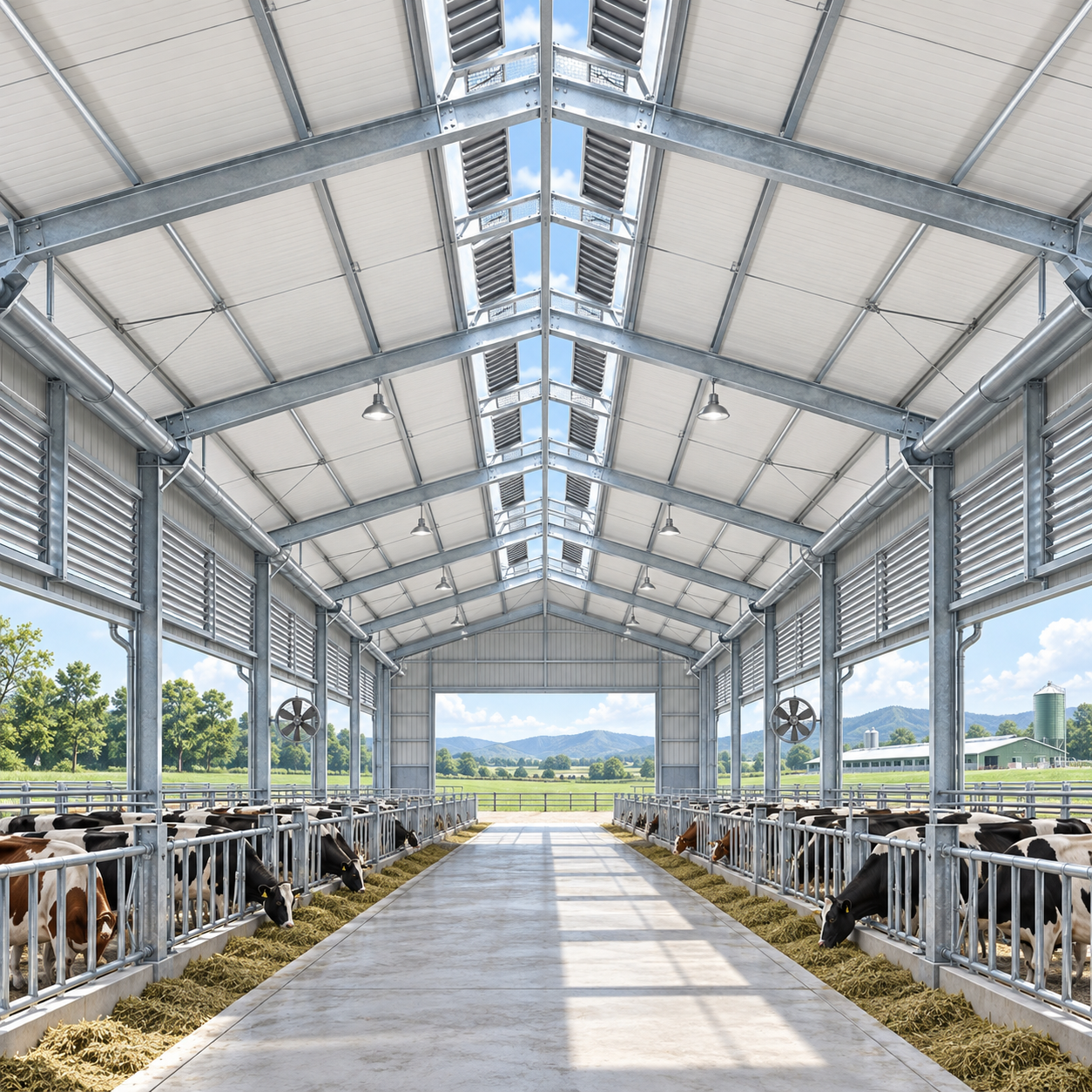
Preventing Condensation and Corrosion in Livestock Steel Buildings
Condensation and corrosion rarely begin as obvious structural failures. In livestock housing, they usually appear first as roof sweating before sunrise, damp insulation at the eaves, rust staining around screws, or a powdery coating surface near wash-down areas. Left unattended, these small signs can develop into persistent moisture exposure that shortens the service life of Livestock Steel Buildings, increases repair work, and creates a less stable environment for animals and workers.
For maintenance teams, the practical challenge is not simply removing visible rust. It is identifying why moisture is staying inside the building and stopping the cycle before coatings, connections, purlins, and cladding are affected. Animal heat, manure gases, bedding moisture, drinking systems, pressure washing, and changing outdoor temperatures all act together. A steel frame can be well designed and still deteriorate prematurely if ventilation is blocked, insulation is wet, roof drainage is poor, or small coating defects are ignored.
Why Livestock Buildings Create a High-Moisture Environment
Condensation forms when warm, humid air touches a surface that is colder than the air’s dew point. In a livestock shed, that humid air is generated every day. Animals breathe and release moisture; litter and manure add evaporation; open water lines, leaking drinkers, and cleaning operations contribute more. During cold nights or early mornings, the underside of roof sheets can become cold enough for moisture to condense into droplets.
The problem is often seasonal, but it should not be treated as a seasonal inconvenience. Repeated wetting is what matters. Condensate dripping from roof panels may soak insulation, collect around laps, run across purlins, or settle at connection points. In poultry and swine facilities, airborne ammonia and other contaminants can make the environment more aggressive for unprotected or damaged steel surfaces. Corrosion is therefore rarely caused by moisture alone; it is usually the combination of moisture, poor drying conditions, deposits, and compromised protective layers.
A useful maintenance rule is simple: if a surface remains wet longer than expected after a cold morning, wash-down, or rainfall event, investigate the drying path. Steel that becomes wet but dries quickly is not exposed in the same way as steel that stays damp inside an enclosed, poorly ventilated roof zone.
Start With the Moisture Path, Not the Rust Spot
A rust spot is evidence, not necessarily the root cause. Maintenance inspections are more effective when they trace water from its source to the steel surface. Start at the roof and work downward: roof sheets, ridge details, penetrations, gutters, eaves, insulation, purlins, bracing, columns, base connections, and floor drainage. Look for patterns rather than isolated defects.
Rust concentrated below skylights, vents, ridge caps, or roof penetrations may point to leakage rather than condensation. Corrosion on the underside of sheets over the full length of a bay is more likely to indicate warm moist air reaching a cold roof surface. Localized deterioration around animal pens or manure handling zones may reflect chemical exposure, splash, poor wash-down practices, or inadequate cleaning of accumulated deposits.
It is also worth checking whether a repair has unintentionally created a trap. Added liners, blocked eave openings, sealed wall junctions, or insulation repairs without a continuous vapor-control strategy can restrict airflow and hold moisture where it cannot be seen. A building may look tighter and cleaner after an upgrade while becoming more vulnerable behind the cladding.
Inspection points that deserve priority
- Undersides of roof sheets, especially near ridge lines, eaves, and changes in roof pitch.
- Purlin top flanges and lapped steel where condensate or roof leaks can remain hidden.
- Fasteners, washers, stitch screws, and cut edges around openings.
- Gutters, downpipes, valley gutters, and discharge points for standing water or overflow marks.
- Column bases, slab interfaces, door thresholds, and areas exposed to wash water.
- Insulation for sagging, darkened areas, wet facings, compression, or gaps around penetrations.
- Vent openings, fans, curtains, and louvers for obstruction, incorrect operation, or dirt buildup.
Photographs taken from the same positions during each inspection can be more useful than a long written note. They make it easier to see whether staining, coating loss, or deformation is stable or progressing. When safe access is available, inspect after rainfall and again after a cold, humid morning; the contrast often reveals whether the issue is rain ingress, condensation, or both.
Ventilation Must Remove Moisture Without Creating New Problems
Ventilation is the first line of defense against condensation, but “more airflow” is not always a complete answer. The goal is to remove humid air from the occupied zone and roof space while avoiding dead zones, uncontrolled drafts, or conditions that compromise animal comfort. Ridge vents, sidewall inlets, mechanical extraction, and circulation fans need to work as a system.
A common maintenance failure is a ventilation route that exists on drawings but no longer functions in operation. Mesh can clog, curtains may remain closed too long, fan belts can slip, sensors can drift, and temporary storage can block openings. In naturally ventilated buildings, wind direction and nearby structures may also reduce the expected movement of air. If condensation repeatedly occurs in one section of the roof, compare the operation of that zone with the rest of the building rather than assuming the roof material is at fault.
During cold weather, reducing ventilation to retain heat can be tempting. Yet sealing the building too tightly may raise indoor humidity and create heavier roof condensation. The correct balance depends on animal type, stocking density, local climate, insulation level, and the facility’s ventilation design. Maintenance personnel should record temperature and humidity trends where possible, then discuss recurring conditions with the building designer or ventilation specialist instead of relying only on visual symptoms.
Insulation, Vapor Control, and Roof Details Work Together
Insulation reduces the temperature difference between interior air and the inner roof surface. When it stays dry and continuous, it can substantially reduce the chance of reaching dew point. When it becomes wet, compressed, or separated at joints, its thermal performance falls and the roof surface becomes colder. That is why replacing a stained panel without checking insulation behind it often produces only a temporary improvement.
Vapor control layers deserve equal attention. Their purpose is to limit warm interior moisture from moving into colder parts of the roof or wall assembly. Tears around fasteners, gaps at overlaps, incomplete sealing around pipes, and unsealed transitions at eaves can allow humid air to bypass otherwise sound insulation. The location and type of vapor-control layer must suit the local climate and roof build-up; an unsuitable retrofit can shift condensation into another part of the assembly.
Roof drainage is less glamorous but just as important. Gutters should fall correctly, remain free of organic debris, and discharge water away from foundations and entrances. Overflowing gutters can wet wall sheets, saturate insulation edges, and keep lower steelwork damp. Check bracket fixings and laps, particularly where different metals meet. Poorly detailed interfaces can retain water and may introduce compatibility concerns that need project-specific review.
Choose Repairs According to the Condition of the Protective System
Not all corrosion requires the same response. Surface discoloration on an intact coating is different from flaking paint, red rust at cut edges, section loss on a purlin, or corrosion around a bolted connection. The repair method should match the severity, location, original coating system, and future exposure conditions.
For minor coating damage, the work usually begins with cleaning. Remove dirt, salts, manure residue, loose coating, and non-adherent rust before applying a compatible repair coating. Simply painting over contamination can seal in the cause of failure. The coating supplier’s preparation and overcoating guidance should be followed, particularly where galvanized steel, zinc-rich primers, and existing paint systems meet.
Where corrosion is deeper, measure the remaining steel thickness or seek a structural assessment before deciding on a cosmetic repair. Fasteners with corroded heads or damaged sealing washers should be replaced rather than repeatedly coated. If corrosion occurs at recurring roof laps, column bases, or animal-contact zones, review the detail itself. A better drainage route, more suitable flashing, improved separation from wet bedding, or a more robust coating specification may be needed.
Protective options commonly considered for steel structures include hot-dip galvanizing, paint systems prepared over blast-cleaned steel, and duplex systems that combine galvanizing with a paint topcoat. The appropriate choice depends on exposure, detailing, maintenance access, and the expected service environment. In more severe agricultural or coastal conditions, a standard exterior paint finish may not be enough. Coating selection should be confirmed against the actual atmospheric and internal exposure rather than chosen only by appearance or initial cost.
Fasteners and Connections Are Small Components With Large Consequences
Roof and wall fasteners are frequent starting points for leaks because they penetrate the cladding system. A loose screw, aged washer, overtightened fixing, or distorted panel profile can admit water even if the surrounding sheet looks sound. Maintenance teams should check whether fastener lines remain straight and whether washers are compressed correctly without being split or squeezed out.
Connections inside the building need a different type of attention. Dust and manure deposits can sit on horizontal ledges, bolt heads, gusset plates, and brace connections. These deposits retain moisture and make cleaning difficult. Periodic dry cleaning or carefully controlled wash-down, followed by adequate drying, is usually preferable to allowing buildup for long periods. High-pressure washing directed into laps, insulation joints, or connection crevices can make a corrosion problem worse.
After any structural modification—such as adding feeders, suspended equipment, ventilation ducts, solar-related roof attachments, or internal partitions—inspect the affected penetrations and load paths. New holes, field welding, removed coatings, and altered drainage patterns should never be treated as minor finishing details.
Build a Maintenance Routine That Records Change
A useful program combines frequent visual checks with more thorough seasonal inspections. After severe weather, inspect roof drainage, cladding damage, and water entry points. Before cold and humid periods, test ventilation equipment, clear openings, and examine insulation at known problem locations. After wash-down or disinfection work, check that water has not been forced into roof or wall assemblies.
Keep a simple record of the building zone, observed condition, probable moisture source, repair method, coating product used, and follow-up date. This is especially valuable when staff change or when several buildings are maintained across one operation. It also helps distinguish a one-off roof leak from a recurring condensation pattern that requires a wider design review.
Factory documentation can support this work when it includes steel grades, coating details, connection drawings, and erection information. For prefabricated projects supplied internationally, consistency in fabrication and traceability are useful well beyond delivery. A Chinese steel building manufacturer operating a 120,000 m² plant with 100,000 tonnes of annual output, and working to ISO, CE, AS-NZS, and ASTM-related project requirements, should be able to clarify the original material and coating approach where records are available. That information gives maintenance teams a firmer basis for selecting compatible repair materials.
The same discipline applies across different steel building types. For example, the detailing and coating decisions used on a Multi-Storey Office Building may involve different loads and enclosed floor systems, but the fundamentals remain familiar: keep water moving, avoid unprotected cut edges, maintain coating continuity, and make concealed areas inspectable. Livestock facilities simply demand more attention to humidity, contaminants, and cleaning exposure.
When a Local Repair Is No Longer Enough
Repeated dripping across multiple bays, widespread wet insulation, corrosion at primary structural members, leaking roof penetrations, or visible deformation should trigger a broader review. At that point, replacing a few screws or applying touch-up paint may delay a necessary solution. The review may need to cover ventilation capacity, roof assembly design, drainage layout, cladding condition, environmental exposure, and whether structural capacity has been affected.
The most durable approach to Livestock Steel Buildings is not a single coating or a single ventilation device. It is a managed system: dry air paths, intact insulation, reliable drainage, clean connections, compatible protective treatments, and records that show how the building is changing. When maintenance teams respond to the first signs of moisture rather than waiting for visible deterioration, corrosion becomes a controllable issue instead of an expensive surprise.
We are more than happy to serve you here. If you have any question, please feel free to contact us.