
Related Posts
Online Message
How to Check Weld Quality in Prefabricated Steel Buildings Delivery
NEWS Ke Ming Steel Structure · Sep 18, 2021
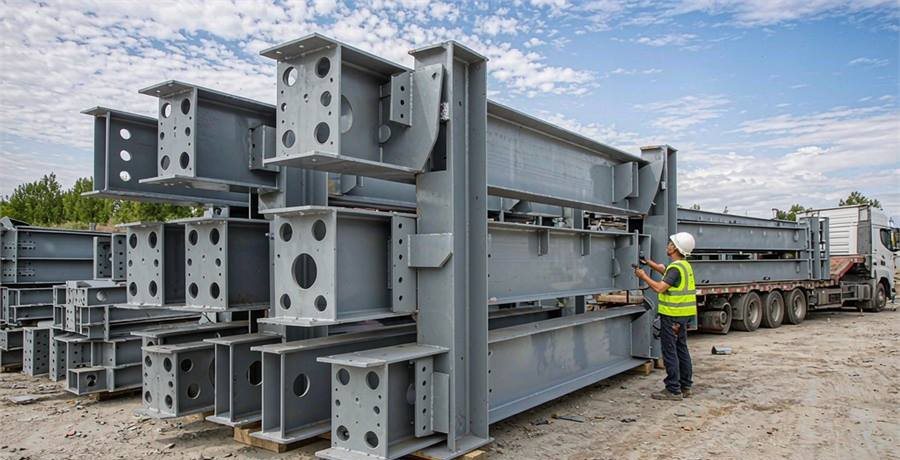
Delivery yard is the last low-cost place to catch a weld problem — verify before the components are unloaded into site stock.
Delivery day for prefabricated steel buildings is often treated as a logistics milestone, but for quality control and safety managers, it is really a decision point. Once components are unloaded, signed off, and moved into erection, hidden welding issues become harder, more expensive, and sometimes dangerous to correct.
A weld that looks acceptable from a distance may still contain undercut, incomplete fusion, crater cracks, excessive spatter, or dimensional distortion that affects fit-up and load transfer. Before acceptance, teams need a practical way to judge weld quality without turning the delivery yard into a laboratory.
The goal is not to re-manufacture the project onsite. It is to verify that the fabricated steel members delivered to site match drawings, comply with specified welding requirements, and do not carry visible or high-risk defects that could compromise structural safety, installation speed, or long-term performance.
Why this stage matters
For companies involved in advanced prefabricated construction, this inspection stage is part of protecting the value built into the structure. Since its establishment on November 26, 2003, Ke Ming Steel Structure Factory has focused on new materials and high-end intelligent prefabricated construction — the more refined the fabrication process becomes, the more disciplined delivery inspection must be.
Weld checking starts before anyone picks up a flashlight or weld gauge. Inspectors need the right reference documents on hand. At delivery, compare the physical components against the approved fabrication drawings, weld symbols, material lists, and inspection records provided by the manufacturer. If the project requires specific codes or acceptance standards, those documents should guide the review rather than personal habit or visual guesswork.
AT A MINIMUM, CONFIRM THESE POINTS
- Member identification marks match the packing list and drawings.
- Weld locations correspond to the intended connection details.
- Required weld sizes, lengths, and types are identifiable.
- Shop inspection reports, non-destructive testing records, or repair records are complete and traceable.
- Coating, galvanizing, or primer has not concealed suspect weld areas without prior acceptance.
If paperwork is incomplete, that is already a quality signal. Missing records do not automatically mean the weld is defective, but they do mean acceptance should be more cautious.
Most delivery-stage weld issues are first found through careful visual inspection. Many serious problems leave visible clues before any advanced testing is used. In prefabricated steel frames, columns, rafters, bracing nodes, base plate connections, crane beam supports, and stiffener welds deserve extra attention because they are often critical to alignment and load path continuity.
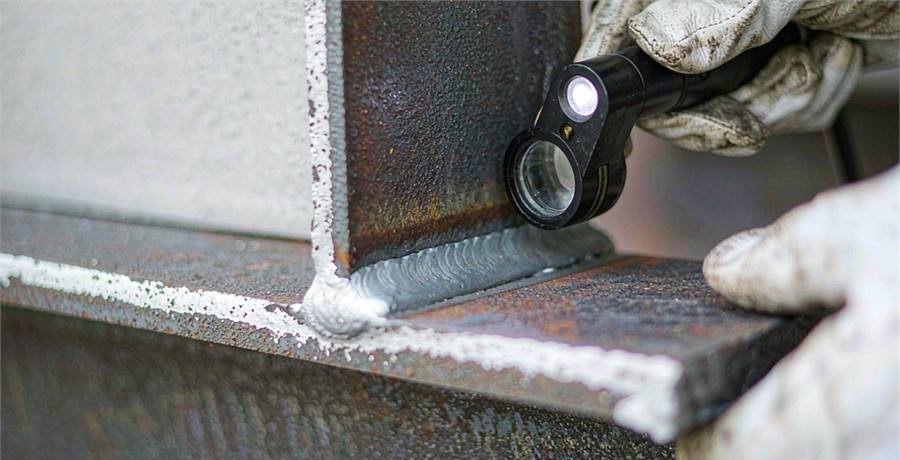 Inspect welds under good lighting and with clean surfaces. Dirt, transport residue, temporary paint marks, and packaging damage can hide defects — wipe the area before assessment if necessary.
LOOK FOR THE FOLLOWING VISIBLE CONDITIONS
A practical habit for inspectors is to view each weld from more than one angle. Defects at the toe, root area, or around attachment plates can disappear when seen only from the front. On repetitive members, if one piece in a batch shows a defect pattern, nearby components may have the same issue.
One of the most common mistakes during delivery inspection is assuming a weld looks “big enough.” Structural weld acceptance should never rely on visual impression alone. Weld size affects load capacity, and in prefabricated steel buildings, undersized fillet welds can remain unnoticed until erection crews struggle with unexpected movement or until service loads expose the weakness.
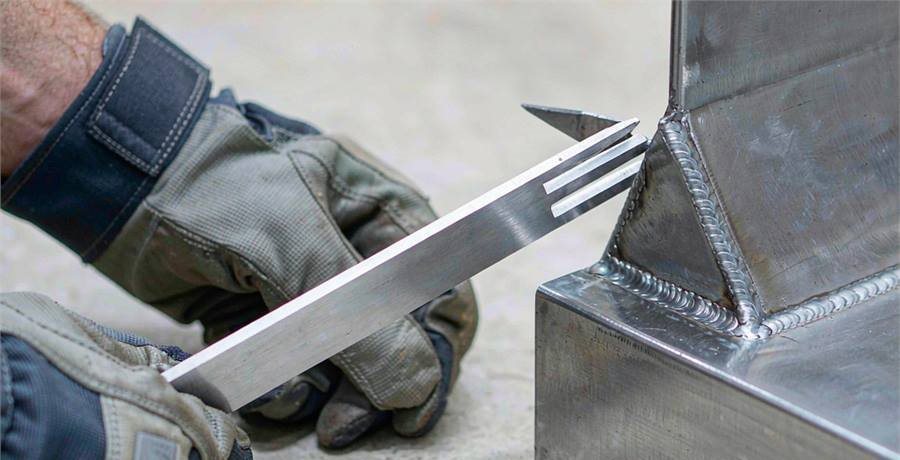 Measure, don’t assume: use a weld gauge to check leg size, throat where relevant, and bead profile, then compare with the drawing requirement.
- Use a weld gauge to check leg size, throat where relevant, and bead profile.
- Compare measured dimensions with the drawing requirement.
- Also verify weld length — a weld may have the correct size but stop short of the specified extent, especially near corners, stiffeners, or end returns.
- Pay attention to consistency — if one end of a beam connection shows a full, even fillet and the opposite side becomes noticeably smaller, document it. Welding quality problems often appear as variation rather than complete failure.
Not all welds carry the same risk. In a prefabricated steel project, some locations should be prioritized because repair after erection is disruptive and sometimes unsafe. Focus first on:
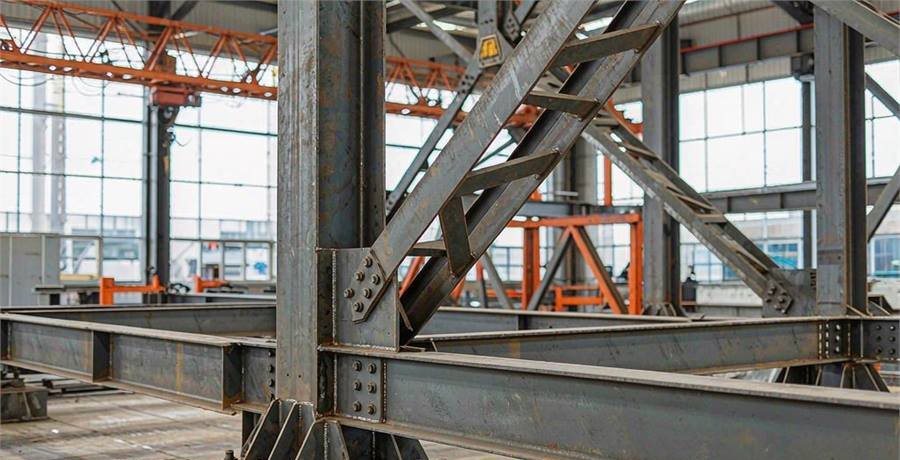 Base plates, end plates, stiffeners and gusset nodes carry the load path — inspect them before the cosmetic welds.
Crane system welds deserve extra care: if the project includes an industrial storage or handling facility, dynamic loads are less forgiving than static enclosure loads.
In applications similar to a prefabricated steel warehouse with a crane system, delivery inspection should not only verify the visible weld condition but also check whether the fabricated lifting-support components match the intended structural arrangement and detail quality expected for repeated operational loading.
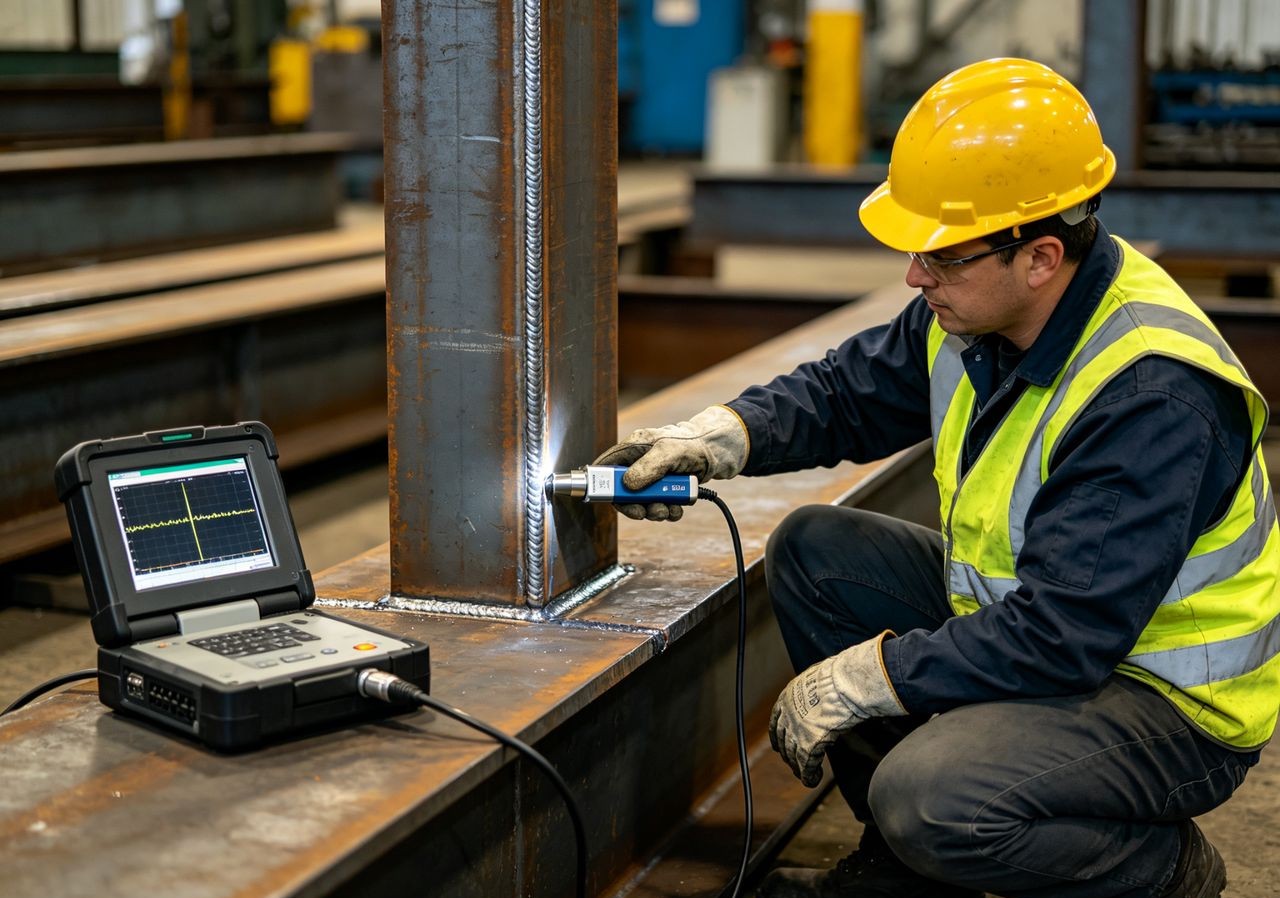
Delivery teams sometimes ask: do we need non-destructive testing at this stage? The answer depends on project specifications, criticality, and what visual inspection reveals. If welds are in highly stressed zones, if there is evidence of repair, or if visible signs suggest possible internal defects, additional testing may be justified before acceptance.
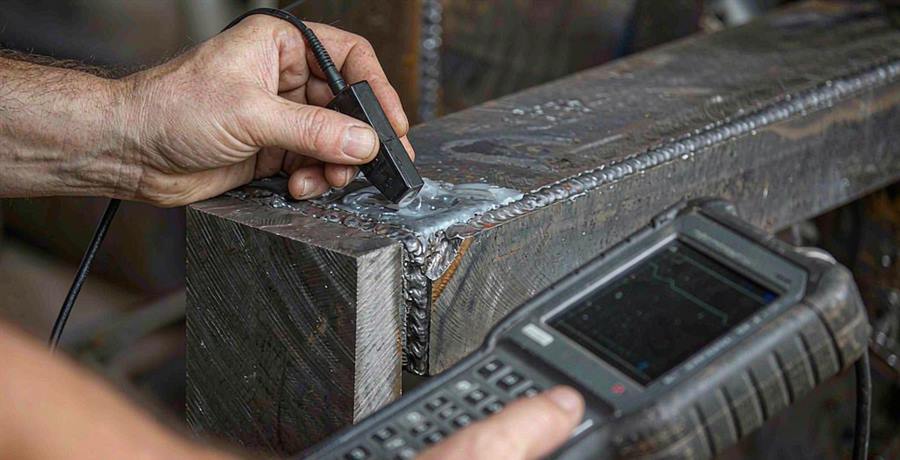 Escalate when evidence justifies it: ultrasonic testing (UT) helps detect internal flaws in thicker or critical welds.
Quality personnel do not need to order advanced testing for every shipment. They do need to know when the visible evidence, project risk level, or documentation gaps justify escalation. If a critical welded node shows suspicious profile irregularity and there is no supporting NDT record, accepting it on appearance alone may be a costly shortcut.
Good welds are supported by good traceability. During delivery, documents can reveal patterns that visual checks alone may miss. Watch for unsigned repair logs, unclear welder identification, inconsistent inspection dates, or reports that do not clearly correspond to the delivered member marks.
Another warning sign is overreliance on coating to improve appearance. Primer or touch-up paint should not be used to disguise rough weld finishing, porosity, or unblended repair areas. If the weld surface appears unusually heavy with coating compared with adjacent steel, inspect more closely.
TRACEABILITY ANSWERS THE HARD QUESTIONS
For safety managers, the issue is not paperwork for its own sake. Traceability allows the team to answer later: Who welded the joint? Was it repaired? Was it inspected before shipment? Does the delivered part match the approved fabrication record?
You do not need an elaborate lab setup to improve weld verification. A disciplined inspector with the right basic tools can catch many nonconformities early.
The point is consistency. If every incoming steel package is reviewed using the same inspection logic, fewer issues slip through because someone was rushed or relied too much on memory.
- Focusing only on the most visible exterior members while ignoring secondary but structurally important attachments.
- Accepting welds because erection is already scheduled and the site team feels pressure to keep unloading. Once defective members are mixed into site stock, isolation becomes difficult.
- Treating all imperfections as equally serious. Minor cosmetic spatter is not the same as a crack or missing weld length. Distinguish between appearance issues, workmanship indicators, and structural nonconformities.
- Inspecting only random pieces when the shipment appears generally neat. A tidy delivery does not guarantee compliant weld quality. Batch-based sampling may be useful, but it should still cover critical components and repeated connection types.
When defects are identified, avoid vague notes like “bad weld” or “repair needed.” Record the member mark, weld location, defect type, estimated extent, supporting photo, and reference drawing detail, then decide whether the issue requires rejection, segregation, engineering review, or onsite repair approval.
For quality control teams, the key is to preserve evidence and prevent premature installation. For safety managers, the priority is to stop risk from moving forward into erection activities.
CLEAR DEFECT DISPOSITION
If the shipment belongs to a more integrated industrial system, weld defect handling should also consider operational consequences after installation, not just immediate fit-up.
Checking weld quality in delivered prefabricated steel buildings is not about finding fault for its own sake. It is about confirming that the structure arriving onsite is ready to perform as designed. The best inspectors combine three things: a clear standard, patient observation, and the confidence to pause acceptance when something does not look right.
“In steel construction, many problems are easiest to solve before erection starts. A few extra minutes spent measuring a suspicious weld, reviewing missing records, or isolating a questionable member can prevent rework, schedule disruption, and — more importantly — future safety exposure.”
For QC and safety teams, that is not delay. That is control.
Ke Ming Steel Structure Factory — custom design, factory mass production, global logistics and on-site assembly guidance for prefabricated steel buildings.
We are more than happy to serve you here. If you have any question, please feel free to contact us.