
News center
Related Posts
- ▶ Prefab vs. Conventional Warehouse Construction: Comparing Timelines
- ▶ Planning a Prefab Warehouse: Clear Span, Height and Loading Bays
- ▶ How Long Does It Take to Build a Commercial Steel Building?
Online Message
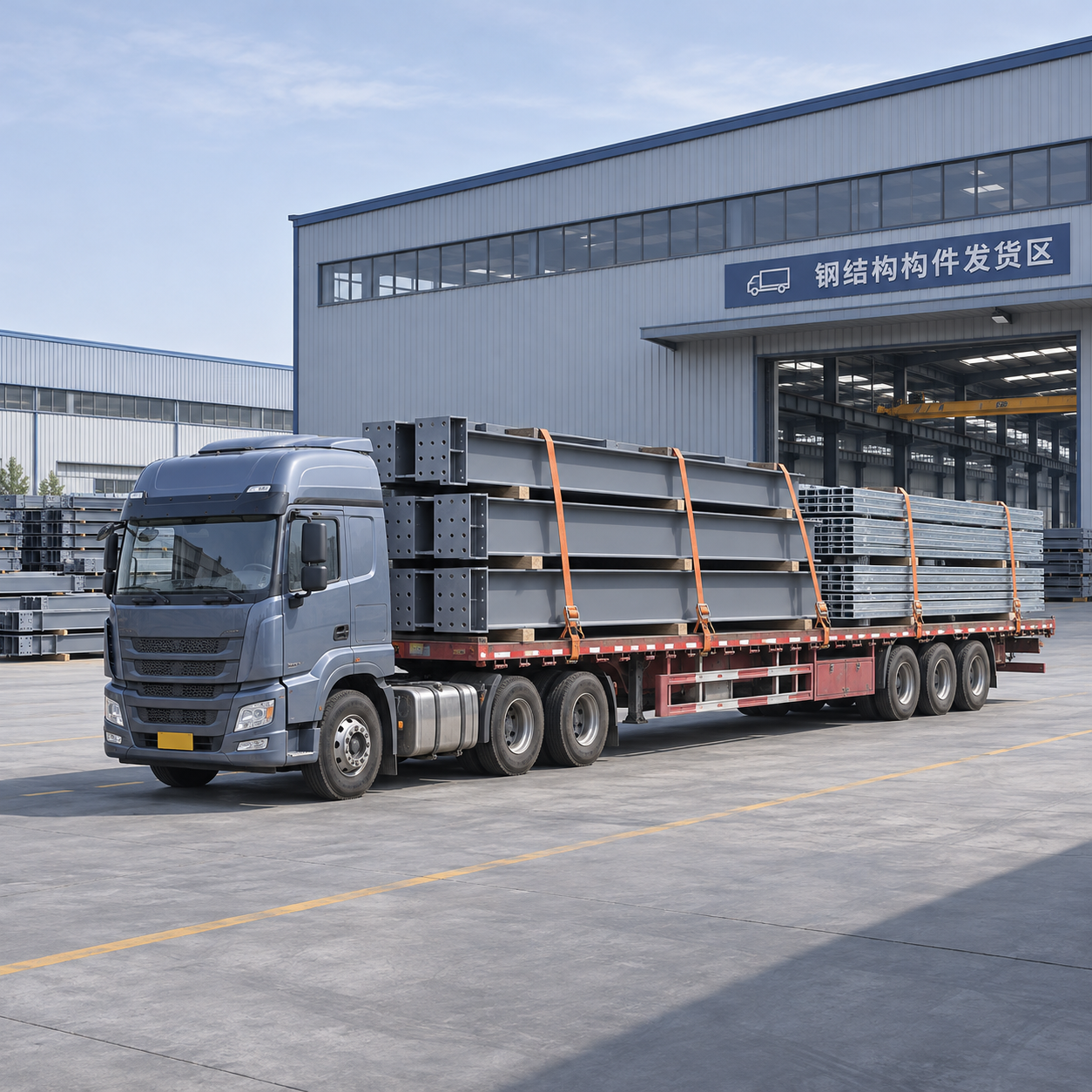
How long does it take to receive a prefabricated steel building? The answer depends on design complexity, factory capacity, shipping distance, and customs clearance.
Buyers also often ask, “are prefabricated steel buildings cheaper than site built?” Both delivery time and overall cost are important when planning a construction project.
This guide explains the main stages of the delivery process, the factors that can affect your timeline, and how working with a factory-direct manufacturer in China can help you plan with confidence.
How Long Does Delivery Usually Take?
For an international order, an initial planning allowance of three to six months from contract signing to site delivery is reasonable for many straightforward projects.
That is a budgeting estimate, not a guaranteed lead time. Complex engineering, overloaded factories, long ocean routes, or permitting problems can extend the schedule considerably.
Delivery estimates also depend on where the clock starts. A supplier’s quoted production period may begin only after drawings are approved and the deposit is received.
Ask whether the quoted date means factory completion, departure from China, arrival at the destination port, or delivery to your construction site. These milestones are not interchangeable.
For a practical schedule, work backward from your required site delivery date and include time for design approvals, fabrication, freight booking, customs, inland transport, and contingency.
What Happens Between Placing an Order and Receiving the Building?
A prefabricated steel building passes through several stages before it reaches the site. The ranges below are illustrative and may overlap or change substantially by project.
1. Engineering and Drawing Approval
Initial engineering and drawing review may take approximately two to six weeks after the supplier receives complete project information. Complex projects can require more time.
The manufacturer typically needs building dimensions, intended use, local design loads, applicable codes, door locations, insulation requirements, and details of cranes or suspended equipment.
Your engineer or approval authority may request revisions. Late changes to dimensions, loads, openings, or cladding can delay both procurement and the start of fabrication.
Before signing, establish who prepares structural calculations and who is responsible for reviewing drawings against local building codes and permit conditions.
2. Material Procurement and Fabrication
Fabrication for a straightforward building may take roughly four to eight weeks after final drawing approval, although order size and factory workload affect the actual duration.
During this stage, the manufacturer cuts and drills steel, assembles and welds components, applies specified coatings, and prepares the parts for packing and dispatch.
Special steel grades, uncommon fasteners, insulation systems, custom colors, or hot-dip galvanizing can add procurement or processing time. Confirm these requirements before accepting a schedule.
A factory’s annual output is useful context, but it does not guarantee an open production slot. Ask for a project-specific capacity commitment and planned fabrication dates.
3. Inspection, Packing, and Export Preparation
Allow additional time for final inspection, packing, documentation, and transport to the departure port. These activities may overlap with fabrication but should appear in the schedule.
Confirm whether inspection reports, component markings, packing lists, and photographs are included. Clear identification helps your receiving team check shipments and locate parts during installation.
Oversized members or unusual cargo may require specialized handling or shipping arrangements. Discuss container dimensions, loading plans, and any transport restrictions before the design is finalized.
4. Ocean Freight, Customs, and Site Delivery
Ocean transit can range from several weeks to longer than a month, depending on the destination, sailing schedule, transshipments, and port conditions.
Transit time alone is not the full freight allowance. Booking delays, export procedures, unloading, customs examination, and inland trucking can add days or weeks.
Ask a freight forwarder or customs broker for a route-specific estimate. The manufacturer should identify the cargo’s expected dimensions, weight, origin, and shipment readiness date.
For remote sites, verify road access, truck size restrictions, unloading equipment, and delivery appointments. A building can reach the destination port while site delivery remains unresolved.
What Can Delay a Steel Building Order?
The biggest schedule risks often arise before fabrication starts. Incomplete project information can lead to repeated drawing revisions and prevent the manufacturer from reserving materials.
Local engineering requirements are another common issue. Wind, snow, seismic loads, fire protection, and building use can change member sizes, connections, and approval requirements.
Special finishes and imported accessories may have longer lead times than standard structural steel. Ask which components determine the production schedule and whether substitutes are acceptable.
Shipping risks include limited vessel space, missed sailings, port congestion, and customs inspections. These are not always within the manufacturer’s control, even under a delivered-price arrangement.
Weather and site readiness can also affect the final handover. Foundations, access roads, cranes, and storage areas should be ready before trucks arrive.
To manage uncertainty, request a milestone schedule with planned dates, responsible parties, dependencies, and a process for reporting changes. Include contingency appropriate to your project.
Are Prefabricated Steel Buildings Cheaper Than Site Built?
Often they can be, but not always. Prefabrication may reduce on-site labor, material waste, and construction time; freight, customization, and local requirements can offset those savings.
The comparison also depends on what “site built” means. A locally fabricated steel frame and a conventional masonry building have different material, labor, and foundation costs.
Compare equivalent buildings designed for the same loads, floor area, openings, insulation, fire requirements, and intended use. Otherwise, the lowest quote may exclude essential work.
For an imported building, evaluate the total installed cost rather than the factory price alone. A low production quote can become less attractive after freight and duties.
Costs to Include in Your Comparison
Start with the building package: primary and secondary steel, roof and wall panels, connections, fasteners, coatings, and any included doors or insulation.
Add engineering review, permits, foundations, unloading, installation labor, lifting equipment, and site preparation. These items are commonly outside the manufacturer’s basic supply scope.
For imported materials, include ocean freight, insurance, port charges, customs brokerage, applicable duties and taxes, inland transport, and potential storage or demurrage charges.
Also consider schedule-related costs. Earlier occupancy may reduce temporary rental or financing costs, while a late shipment can increase equipment rental and contractor standby charges.
Finally, account for lifecycle factors such as maintenance, corrosion protection, energy performance, and future modifications. The cheapest initial package is not necessarily the least expensive building.
When Prefabrication Is More Likely to Save Money
Standardized warehouses, workshops, and agricultural buildings can benefit when repeated components simplify manufacturing and installation. Savings depend on local labor prices and the final specification.
Prefabrication can be especially attractive where skilled site labor is expensive or where a shorter installation window has measurable business value.
However, a small order shipped a long distance, extensive customization, or expensive compliance changes may narrow or eliminate the cost advantage. Obtain comparable local bids.
How Can You Get a More Reliable Delivery Date?
Provide a complete project brief before requesting a firm schedule. Include the site location, building dimensions, design loads, intended use, required standards, and target delivery date.
Identify any features that affect engineering or procurement, including overhead cranes, mezzanines, large openings, fire ratings, solar panels, insulation, and corrosion exposure.
Ask the manufacturer to state when the lead-time clock begins, which approvals are required, and how long each party has to review drawings.
Request separate dates for drawing approval, fabrication completion, dispatch, port arrival, and site delivery. Specify whether each date is an estimate or a contractual commitment.
Confirm the shipping terms using the agreed Incoterms rule and named location. These determine responsibilities for transport, risk transfer, and certain charges, but not every contractual obligation.
For example, a price quoted FOB a named Chinese port does not normally include ocean freight and destination delivery. Check the full contract for loading and documentation obligations.
Agree on a change-control process. A seemingly minor door relocation can affect structural members or cladding production, so ask how revisions change price and delivery dates.
Finally, appoint one person to coordinate the manufacturer, local engineer, freight forwarder, customs broker, and installation contractor. Clear ownership reduces avoidable gaps between stages.
What Should You Check When Buying Factory Direct From China?
Buying directly from a manufacturer can give you clearer access to production information and specifications. It does not remove the need for independent technical and commercial checks.
Verify the supplier’s manufacturing capabilities, quality procedures, relevant project experience, and available production capacity. Ask for a schedule tied to your actual order, not general output figures.
Request applicable certificates and confirm their scope, validity, issuing body, and relevance to your product. ISO certification, for example, does not by itself establish local code compliance.
References to CE, AS/NZS, or ASTM should be checked against the specific products, materials, standards, and destination requirements. Your local engineer or authority should confirm acceptance.
Agree on inspection rights, acceptance criteria, coating specifications, component tolerances, and remedies for missing or defective parts. Clarify who pays for replacement freight and installation delays.
Review payment milestones alongside delivery milestones. The contract should identify what documentation demonstrates progress and how disputes, delays, and schedule changes will be handled.
Before shipment, confirm that packing lists match the approved drawings and that each bundle is marked. Ask for spare fasteners and a procedure for reporting shortages.
A large manufacturing plant and experience supplying multiple countries can support delivery planning, but neither guarantees a particular lead time or compliance in your jurisdiction.
What Should Be Ready Before the Shipment Arrives?
Coordinate foundations with the approved anchor-bolt plan and have the installation team verify bolt locations and elevations. Errors discovered after delivery can interrupt the erection sequence.
Confirm site access, unloading space, lifting capacity, and protected storage for panels and accessories. The receiving team should know the shipment sequence and handling requirements.
Arrange customs documents and import permissions in advance with your broker. Depending on the destination, classification, origin documentation, or product approvals may require particular attention.
Inspect the cargo promptly against packing lists and record visible damage or shortages. Follow the carrier’s and insurer’s notification requirements and preserve relevant delivery records.
Delivery is not the same as a completed building. Allow separate time for erection, cladding, services, inspections, and occupancy approval when planning your opening date.
Final Takeaway
For many international projects, three to six months is a useful starting allowance from contract to site delivery, but the supplier must confirm a project-specific schedule.
Prefabricated steel may cost less than site-built alternatives when production and installation efficiencies outweigh freight, compliance, and other expenses. Compare complete, equivalent installed costs before deciding.
The strongest purchasing decision combines an approved specification, documented milestones, realistic freight assumptions, and clear responsibilities from factory production through customs clearance and site handover.
We are more than happy to serve you here. If you have any question, please feel free to contact us.