
News center
Related Posts
- ▶ Prefab vs. Conventional Warehouse Construction: Comparing Timelines
- ▶ Planning a Prefab Warehouse: Clear Span, Height and Loading Bays
- ▶ How Long Does It Take to Build a Commercial Steel Building?
Online Message
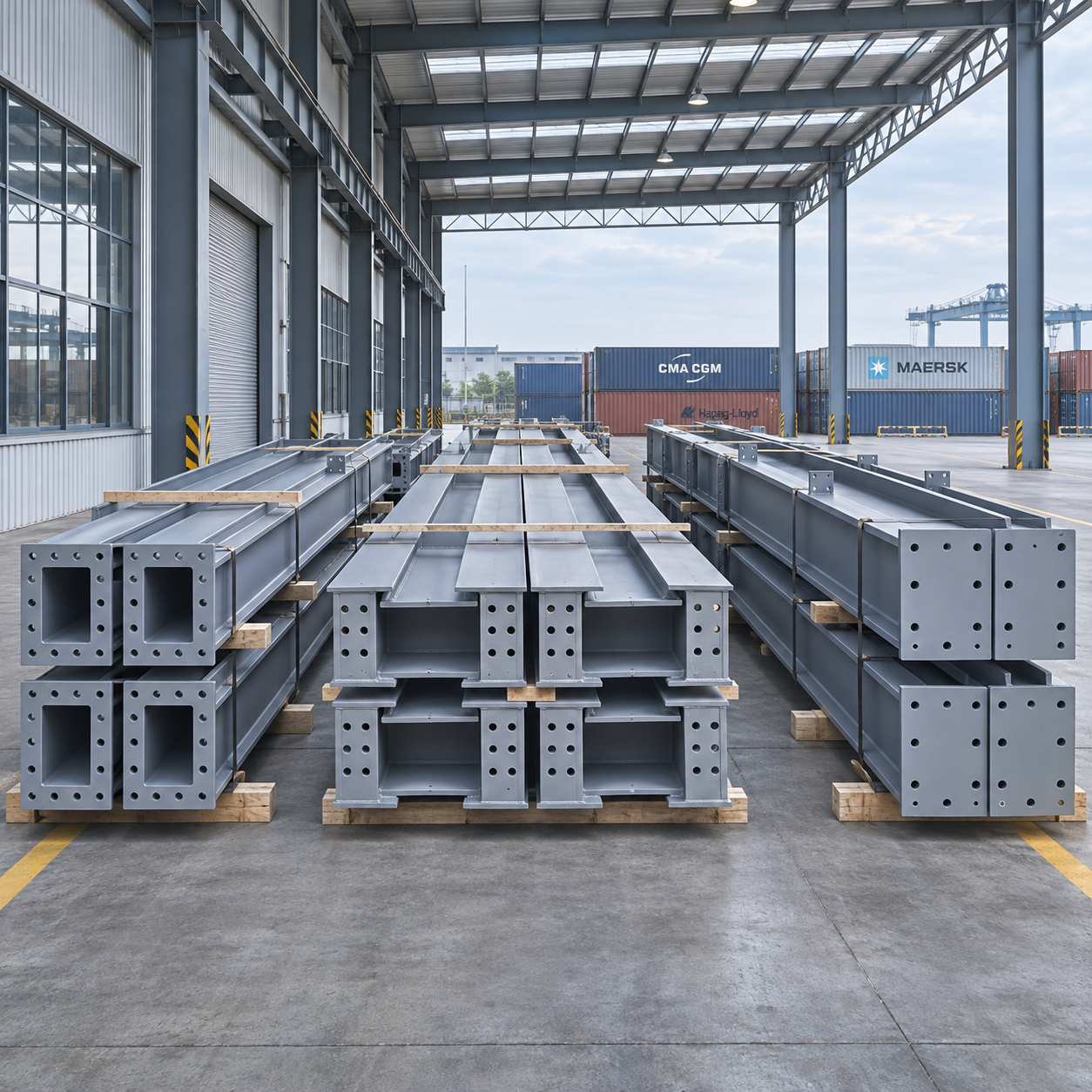
Yes. According to the company information provided, Keming exports prefabricated steel buildings to customers in more than 20 countries. The China-based manufacturer reports a 120,000 m² plant and an annual output capacity of 100,000 tonnes. Those figures describe its stated manufacturing capacity, not a guaranteed allocation or delivery date for an individual project.
An export order still needs to be assessed project by project. The destination, structural design, applicable standards, package contents and shipping arrangements determine whether a particular building can be supplied on the required terms. They also shape the prefabricated steel buildings delivery timeline, which starts before factory production and does not necessarily end when the cargo leaves China.
What does Keming’s export capability cover?
The available company information establishes that Keming supplies factory-direct steel structures internationally. It does not identify every destination, the precise services available in each country or the contents of a standard building package. An overseas buyer should therefore distinguish the general fact that the company exports from confirmation that it can fulfill a specific project.
A prefabricated steel building order can include the main structural frame, such as columns, rafters and bracing, together with secondary members, connection components and other materials. Wall and roof panels, insulation, doors, windows, fasteners and accessories may be included or purchased separately. Foundation work and erection are separate activities unless expressly brought into the contract.
That distinction matters because “building supply” does not automatically mean a complete, ready-to-occupy facility. A quotation covering only the steel frame cannot be directly compared with one that also includes cladding and openings. Equally, a supplier’s ability to export fabricated steel does not by itself establish that it will arrange local permits, customs clearance or on-site installation.
The most useful confirmation is a written scope identifying included components, drawings, documentation, delivery point and any services excluded. This turns the general question “Does Keming export?” into the more practical question: “What exactly will be supplied and delivered for this project?”
How an export order moves from design to delivery
A steel building is not simply selected from inventory and shipped as a finished unit. Its structural members and connections must correspond to the agreed building dimensions, loads, materials and interface requirements. Even where a supplier uses established building systems, the project information needs to be sufficiently complete before fabrication can proceed.
The process starts with a defined building brief: location, intended use, dimensions, clear height, roof form and required openings. The project may also involve cranes, suspended equipment, mezzanines or other loads that materially affect the frame. Destination-specific wind, snow and seismic requirements must be established under the applicable local rules rather than assumed from the building’s appearance or intended use.
Design and drawing review can follow. The parties should agree on who provides the design criteria, who reviews the drawings and whether a locally qualified professional must approve or adapt them. Production based on incomplete or unapproved drawings creates a risk of rework, while approval held up by missing project information delays the point at which the schedule can become dependable.
Fabrication may involve cutting, drilling, welding, surface preparation and protective coating, depending on the specified components. After inspection and packing, the cargo is dispatched for export. Freight booking, export formalities, sea or other transport, import clearance and inland delivery are distinct activities, potentially handled by different parties.
Installation is a further stage. A shipment arriving at a port is not equivalent to steel arriving at the site, and arrival on site is not equivalent to an erected building. A realistic project schedule names the milestone being promised: readiness for dispatch, departure, arrival at a named port, delivery to site or another expressly defined event.
What determines the delivery timeline?
There is no reliable universal lead time for a Keming export order in the available information. The company’s stated annual capacity does not reveal current factory loading, drawing approval time, material availability or freight conditions. A project-specific schedule should identify its starting point and assumptions rather than offer a single unexplained number.
Design readiness is a major scheduling variable. If the building dimensions are known but the design loads, crane details or local approval requirements remain open, a production date based only on the initial inquiry may be premature. Changes after drawings are approved can affect material ordering, fabrication and packing, as well as the schedule.
Scope and fabrication complexity also matter. A straightforward frame and a building with complex connections or additional structural loads do not necessarily require the same engineering and production work. Protective coating specifications and inspection requirements can add operations or impose conditions that need to be accommodated in the plan.
Shipment is a separate dependency. The available route, vessel schedule, cargo dimensions and handling arrangements affect the logistics plan. Long or irregularly shaped members may require a packing and transport solution different from that used for smaller components. Port congestion, customs queries or inland transport restrictions can further affect the interval between dispatch and site delivery.
A useful schedule therefore separates at least drawing approval, production, inspection and packing, transportation, and import delivery. Where activities can overlap, the schedule should show the dependency clearly. For example, foundation work may proceed while the steel is being fabricated, but only if the foundation design and anchor-bolt information have been approved and coordinated.
Why standards and certification need careful interpretation
Keming’s supplied company profile refers to ISO, CE, AS-NZS and ASTM certifications. These labels should not be treated as interchangeable evidence of approval for every building or destination. ISO identifies a family of international standards; CE marking relates to applicable European requirements and is not a general-purpose certificate for all markets; AS/NZS refers to Australian and New Zealand standards; and ASTM publishes standards used for materials, products and testing. The exact standard, edition, product scope and applicable conformity requirements matter.
For a specific order, the relevant question is not simply whether a supplier lists these names. It is whether the proposed materials, fabrication processes, structural design and supporting documentation meet the requirements applicable to the project. A material specification, a factory management-system certificate and approval of a building design serve different purposes.
Documentation requests should be tied to the intended use and jurisdiction. Depending on the contract and local requirements, relevant records could include material certificates, fabrication and inspection records, coating information, design calculations or declarations associated with applicable requirements. The parties should establish which documents will be supplied, in what form, and at which stage.
Local building approval is a separate issue from export documentation. A shipment can be correctly declared for customs purposes without the building design having been accepted by the authority responsible for the project. Conversely, a design review does not replace the import documents needed to release the cargo.
Where delivery responsibility begins and ends
A factory-direct transaction does not by itself define who books freight, insures the cargo, completes export procedures or pays import duties. These responsibilities depend on the contract and the agreed trade term. An Incoterms rule, when used, should be stated with its applicable edition and a named place or port; a term without a location leaves an important part of the delivery arrangement unclear.
Cost responsibility and transfer of risk should also be distinguished. A party may arrange or pay for a transport leg without bearing every risk associated with it. The contract should address insurance separately, including who arranges it and what the policy covers. Unloading, port storage, customs examinations and inland transport deserve particular attention because they can create costs beyond the quoted steelwork price.
Export paperwork should match the commercial and physical shipment. Depending on the transaction, the required set can include a commercial invoice, packing list, transport document and other documents required by the destination or contract. Descriptions, quantities, weights and package identifiers need to be consistent enough for customs handling and site reconciliation.
Packing detail is especially important for a building delivered in many individual pieces. Piece marks on fabricated members should correspond to the erection drawings and packing records. Without that link, a shipment may be physically complete but difficult to check or install. The contract should also state how shortages, damage and nonconforming components are reported and resolved.
Confirming a workable project commitment
Before treating an export quotation as a firm project plan, the parties need the same understanding of the building and the delivery obligation. A useful written request or order should establish:
- The project location, intended use, building dimensions and applicable design criteria.
- The structural and non-structural components included, with exclusions identified.
- The standards and documentation required for the destination and the agreed basis for design review.
- The delivery term, named location, transport responsibilities and insurance arrangements.
- The schedule milestones, their starting conditions and the process for handling design changes.
- The packing, identification, inspection and procedures for reporting missing or damaged items.
Foundation interfaces deserve particular attention. Column base locations, anchor-bolt layouts and tolerances must align with the steelwork drawings. If foundations are built from preliminary information and the connection details later change, the resulting site correction can outweigh the time saved by starting early.
Keming’s stated export activity answers the basic question affirmatively. Whether it is a workable supplier for a particular overseas building depends on the agreed scope, documented compliance route and delivery commitment. Those details—not the fact of export alone—determine what will arrive, where responsibility passes and how the shipment fits the construction schedule.
We are more than happy to serve you here. If you have any question, please feel free to contact us.