
News center
Related Posts
- ▶ Prefab vs. Conventional Warehouse Construction: Comparing Timelines
- ▶ Planning a Prefab Warehouse: Clear Span, Height and Loading Bays
- ▶ How Long Does It Take to Build a Commercial Steel Building?
Online Message
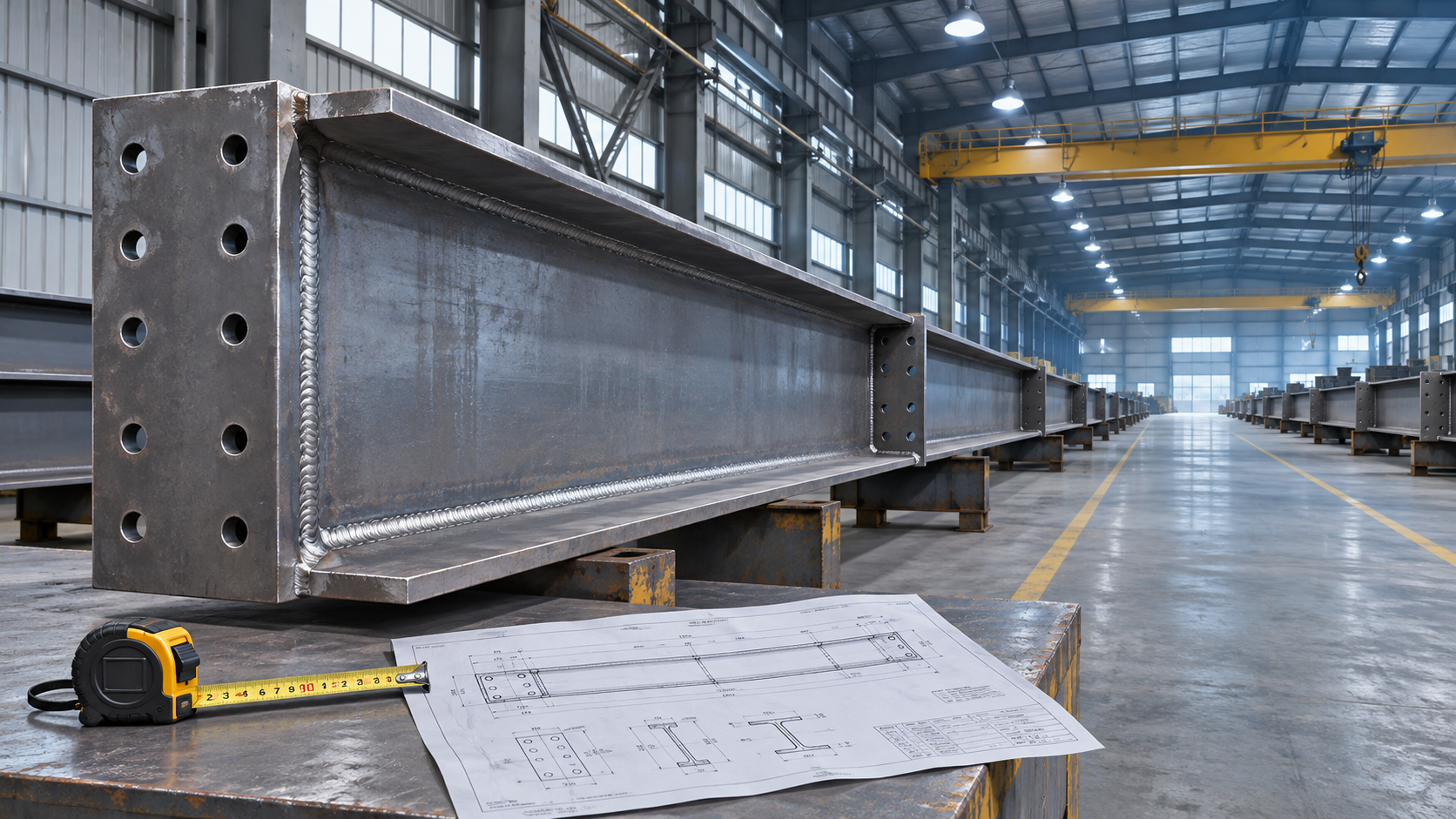
Keming’s steel structure quality can be assessed by following a clear chain of evidence: the building must be designed for the intended site and use, fabricated from specified materials, inspected against agreed acceptance criteria, and delivered with records that connect the finished components to those requirements. A factory’s size or a certificate can support that assessment, but neither establishes that a particular building meets its project requirements.
For a buyer reviewing Keming steel structure design and fabrication quality, the most useful starting point is a project-specific review of the design basis, drawings, material records and inspection arrangements. The depth of review should reflect the building’s complexity and the consequences of failure. A straightforward storage building and a structure carrying heavy cranes may both use prefabricated steel, but they do not call for the same level of engineering scrutiny.
Start with the design conditions, not the component list
A quotation may describe frame sizes, steel grades and connection types, but those details have limited value until the buyer understands the loads and conditions behind them. A sound assessment begins with the design basis: where the building will stand, what it will be used for, and which requirements the structural designer has been asked to satisfy.
For example, a warehouse frame must account for the applicable wind and seismic conditions, roof loads and the building’s geometry. If the owner later adds suspended equipment, solar panels, a mezzanine or an overhead crane, those additions can change the demands on the structure and its connections. The buyer should make sure such loads are included before comparing designs or approving drawings.
The design package should identify the applicable structural code and load assumptions, along with the material grades and connection design criteria. It should also make clear who is responsible for the primary frame, secondary members, foundations and interfaces with other suppliers. A well-fabricated steel column cannot compensate for a foundation interface based on different reactions or anchor-bolt positions.
Drawings deserve particular attention at the interfaces. Column bases, bracing connections, roof openings and crane-supporting members are places where structural requirements and installation details meet. Buyers do not need to redesign the building themselves, but their engineer should be able to trace the design assumptions through to the calculations and drawings submitted for review.
Destination matters as well. A building exported from China may need to satisfy local building regulations, approval procedures and engineering review requirements in its destination country. Buyers should establish which code editions apply, whether a locally licensed engineer must review or adapt the design, and who will provide the documents needed for approval. A reference to an international standard in a proposal does not by itself settle those questions.
Examine what the material and fabrication records prove
Once the design basis is established, the assessment moves to whether the factory can produce the specified components consistently. Steel grade, plate thickness, section dimensions and connection details should correspond to the approved drawings and specifications. Substitution can be acceptable when properly engineered and approved, but a material that appears similar should not be treated as interchangeable solely on its commercial description.
Material certificates are useful when they identify the product and relevant properties against the specified standard. They are more persuasive when the supplier can connect them to the material used in the order through a traceability system, such as heat numbers or controlled production records. The degree of traceability should be agreed before production, especially where the project specification or local authority requires it.
Fabrication quality also depends on processes that may no longer be visible after the building is erected. Cutting, assembly, welding, drilling, straightening and surface preparation all affect the finished structure. A buyer should ask how these operations are controlled and what records will be available, rather than relying only on photographs of completed members.
For welded work, relevant evidence can include applicable welding procedure qualifications, welder qualifications and inspection records. The project specification should define which welds receive visual inspection and where additional non-destructive testing is required. The scope and acceptance criteria should reflect the design and governing specification; requesting every available test on every weld can add cost without necessarily addressing the most significant risks.
Dimensional control is equally practical. Incorrect member lengths, hole locations or connection-plate alignment can cause delays and site modifications even when the steel and welds meet their specifications. Buyers should review the tolerances and inspection arrangements for critical interfaces, particularly where components must fit foundations, equipment or steelwork supplied by another party.
Protective coatings need their own specification. The appropriate system depends on exposure during transport, storage and service, as well as the intended maintenance approach. A coating description should address surface preparation, the coating system and inspection criteria. For a coastal or chemically aggressive environment, the owner’s corrosion requirements should be established during design and procurement, before surface treatment begins.
Read certificates in the context of the order
Keming describes its operations as having ISO, CE, AS-NZS and ASTM certification. Those references can be a starting point for review, but they cover different kinds of requirements and should not be treated as interchangeable assurances. ISO may relate to a management system or another defined scope; CE marking is tied to applicable product legislation and assessment requirements; AS/NZS and ASTM references identify standards or specifications whose relevance depends on the product and project.
The useful question is what each document actually covers. Ask to see the certificate or declaration, its scope, the issuing or assessment body where applicable, its validity, and its relationship to the manufacturing location and products being purchased. A management-system certificate can indicate that processes are subject to a defined system; it does not certify every calculation, weld or delivered component.
Likewise, compliance with a material specification does not automatically establish compliance of the completed building with a destination country’s structural code. The buyer’s engineer should check how the proposed materials, fabrication requirements and design rules fit together. Where local approval is required, agree early on the evidence the approving party will accept.
Keming’s stated 120,000 m² plant and 100,000-tonne annual output capacity provide context about its manufacturing scale. They do not establish the inspection outcome for an individual order. Capacity becomes relevant to quality when the buyer can understand how the supplier plans production, controls subcontracted work if any, and maintains the agreed inspection and documentation requirements for the project.
Set inspection and acceptance points before production
The strongest quality review is arranged before steel is cut. The purchase documents should identify the approved drawings, specifications, inspection responsibilities and acceptance criteria. They should also state what happens when a component does not conform: how it is recorded, who approves a repair or change, and which records are included in the final package.
An inspection and test plan can turn those requirements into practical checkpoints. Depending on project risk, the buyer may review documents remotely, witness selected operations, appoint an independent inspector or combine these approaches. The plan should make clear which stages require advance notice and which require formal release before work continues.
A proportionate plan might cover these points:
- Before fabrication: review the design basis, approved drawings, material specifications and proposed inspection scope.
- During fabrication: check material identification, selected fit-up and weld inspections, dimensional controls and the handling of nonconformities.
- Before dispatch: review final inspection records, coating results where specified, component identification, packing and the outstanding document list.
Third-party inspection can add an independent view, but its value depends on the agreed scope. An inspector present for a final visual check cannot retrospectively witness every fabrication stage. The inspection agreement should state which documents, processes and components are covered, and whether sampling is used.
The final records should be usable by the people receiving and erecting the building. Depending on the contract, they may include approved drawings, material certificates, weld and coating inspection reports, dimensional checks, a component list and records of accepted deviations. Marking on the steel and packing documents should allow the site team to identify members against the erection drawings. Missing identification can turn an otherwise acceptable shipment into a time-consuming site problem.
Judge the evidence as a connected package
No single record answers the whole quality question. A material certificate may show that steel met a stated specification, while the drawings establish where that steel was intended to be used. A weld report shows the result of an inspection within its defined scope; it must be read alongside the applicable procedure and acceptance criteria. A coating report is useful only when the specified system and required measurements are clear.
Consider a buyer comparing two proposals for the same building. One may offer lighter members and a lower price. That is not automatically a quality problem, but the comparison is meaningful only if both proposals use equivalent site loads, service conditions, design codes and included scope. Differences in crane loads, corrosion protection or connection responsibilities can explain a substantial design difference. Those assumptions should be reconciled before price becomes the deciding factor.
The decision to proceed is strongest when the buyer’s engineer can follow the requirements from the site conditions through the design, fabrication controls and inspection records to the identified components. Any gap that could affect structural safety, regulatory approval or installation should have an agreed resolution and responsible party before the relevant work moves ahead.
We are more than happy to serve you here. If you have any question, please feel free to contact us.