
News center
Related Posts
- ▶ Prefab vs. Conventional Warehouse Construction: Comparing Timelines
- ▶ Planning a Prefab Warehouse: Clear Span, Height and Loading Bays
- ▶ How Long Does It Take to Build a Commercial Steel Building?
Online Message
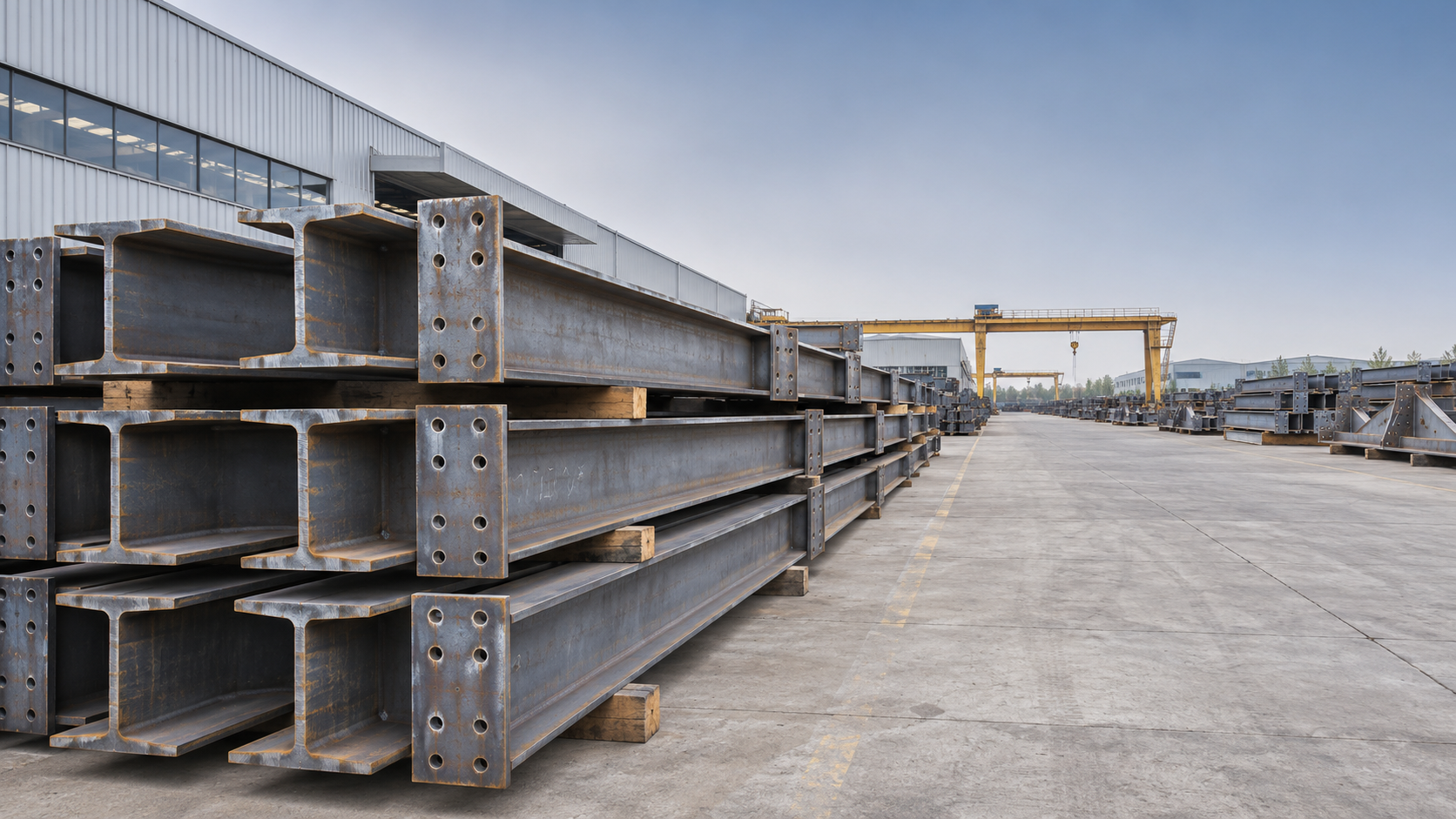
Can structural steel components be reused after disassembly? In many cases, yes. Beams, columns, braces and other members can be used again when their condition, properties and dimensions are verified and a structural engineer confirms that they meet the requirements of the new application.
The decision becomes difficult when a building is being removed and its steel appears sound, but drawings are missing or connections have been cut without a recovery plan. A member that looked suitable on the ground may later prove too short, have damaged bolt holes or lack the documentation needed for approval. Checking these issues before dismantling helps preserve options and avoid moving material that cannot be used as intended.
Start with the intended use, not just the appearance of the steel
Reclaimed steel does not have to return to the same role it played in the original building. A beam from a roof frame, for example, might be considered for another roof, a secondary support or a less demanding application. Each proposed use has its own loads, span, restraint and connection requirements. A member that was adequate in its old position is not automatically adequate in a new one.
Begin by identifying the components that match the proposed layout closely enough to justify further investigation. Record their section sizes, lengths and visible modifications, then compare them with the preliminary design. Allow for material that may need to be removed at damaged ends or around existing connections. A member that is long enough before repair may no longer be long enough afterward.
The engineer must check the new structure as a whole as well as the individual members. Differences in wind, snow, seismic demands, exposure or building geometry can change the forces in a frame. Connections, bracing and foundations also need to work with the reclaimed members; reusing a set of columns and beams does not necessarily mean the original structural system can simply be reconstructed elsewhere.
Which components are most promising?
Members that can be identified, separated without major damage and matched to a new design are generally the strongest candidates. Bolted assemblies often offer a practical starting point because their connections may be accessible for removal. Welded assemblies can also be recovered, but separating them may require cutting away connection material and leaving shorter or altered members.
Do not assume that connection hardware can be reused simply because the main members can. Removal can damage threads or coatings, and some fasteners may have installation requirements that make reuse unsuitable. The connection design should specify what can be retained and what must be replaced under the applicable requirements.
Inspect before, during and after dismantling
An initial survey while the structure is still standing can reveal issues that are harder to interpret once pieces are mixed in a storage yard. Look for distorted members, impact damage, corrosion around bases and water traps, damaged fire protection and signs of past alterations. Note locations where inspection is obstructed; an inaccessible surface is not evidence that the surface is sound.
Existing drawings, fabrication records, material certificates and previous inspection records can help establish what is present. They should be checked against the building itself: members may have been replaced, reinforced or modified after the drawings were produced. Mark each candidate member and connect its identifier to its original location, measurements and available records.
Look beyond surface rust
Light surface corrosion is not the same as section loss, but a visual impression alone cannot establish remaining capacity. Clean representative areas where necessary and measure suspect thicknesses, particularly at column bases, connection interfaces and places where moisture or debris accumulated. Pitting, local thinning and hidden corrosion between connected surfaces can affect both the member and its joints.
Also examine bends, twists, dents, local buckling, cracks, damaged welds, enlarged holes and evidence of fire or excessive heat. A member exposed to a fire should not be accepted solely because it remains standing or looks straight. Its condition and material properties may need specific evaluation, and the investigation should include connections as well as the main section.
After removal, inspect surfaces that were previously concealed and record any damage caused by lifting or cutting. Keep questionable members separate from accepted stock until the engineer determines whether repair, further testing, another use or recycling is appropriate.
Traceability and testing: deciding what is actually known
A section’s dimensions can often be measured, but its steel grade, toughness, weldability and previous service history may not be apparent from its shape. Reliable identification matters because the new design may depend on properties that cannot be confirmed by sight. Labels and records are useful only when they can be linked confidently to the individual member.
Where documentation is incomplete, the project team should determine whether the governing design and approval framework permits properties to be established through assessment and testing. Depending on the uncertainty and intended use, this may involve material sampling, dimensional checks, hardness or other tests, and nondestructive examination of selected areas. Sampling locations and the interpretation of results require an appropriate technical plan; one test does not automatically establish the properties of every unidentified member in a mixed stockpile.
Testing can also be disproportionate to the value of a small batch. Before commissioning it, ask which design decision the result will support, whether the material can be traced to a consistent group, and what happens if the result is inconclusive. Where required properties cannot be established to the satisfaction of the responsible engineer and approval authority, the steel should not be used in that structural role.
Plan the removal around the members worth saving
Recovery starts before the first connection is released. The dismantling plan should identify load paths, temporary bracing, lifting points and the sequence for removing members without making the remaining structure unstable. This is a structural and site-safety task, not merely a matter of choosing which bolts to undo.
- Survey and label. Identify recoverable members in place, document their orientations and connections, and record any known damage or inaccessible areas.
- Separate the structure safely. Install temporary support as designed, then release connections in a controlled sequence. Do not rely on the member being removed to remain stable after adjacent elements are disconnected.
- Protect usable material. Select lifting methods that avoid bending, gouging or dropping members. Where cuts are unavoidable, agree on cut locations that preserve the useful section and leave room for later fabrication.
- Inspect and segregate. Compare each removed member with its record, document newly visible defects and separate accepted, suspect and rejected material.
- Store with identification intact. Support members adequately, keep them out of standing water and avoid stacking arrangements that cause deformation or damage coatings. Maintain labels and records through transport and handling.
Paint, fireproofing and other existing coatings may need assessment before cutting, blasting or welding. The removal method must address any hazardous substances identified and comply with local worker-protection and waste-handling requirements. Damaged coatings can also conceal corrosion, so the inspection and coating-removal plans should be coordinated.
Can the old connections be adapted?
Connections are often the point at which an apparently suitable member becomes difficult to reuse. Existing bolt patterns may not align with the new frame; holes may be elongated, edges may be damaged, or old welds may interfere with new plates. Adding another set of holes or cutting off an end can reduce the usable section or leave insufficient material around the connection.
There may be workable options, such as designing around an existing end plate, trimming and refabricating an end, or replacing a connection component. Each changes the detailing and must be checked for the forces and fabrication tolerances of the new structure. Straightening, welding or reinforcing damaged steel should follow an engineered procedure rather than an informal site repair, particularly when the grade or weldability is uncertain.
Reusing an entire frame bay can reduce some connection changes when its dimensions and structural arrangement suit the new building. It still requires verification of member capacity, stability, foundations and all relevant connections. Conversely, retaining only selected standard-length members may be more practical when the original layout conflicts with the new design.
When does reuse stop being the practical choice?
Compare the complete recovery route with the alternatives before committing the design. The relevant work may include careful dismantling, temporary support, transport, cleaning, inspection, testing, storage, redesign and refabrication. A large quantity of steel is not necessarily a useful inventory if the pieces are heavily modified or cannot be matched to the required spans and connections.
Direct reuse can avoid producing replacement members and can reduce waste, but its environmental value depends on the work and transport involved. It should not be treated as automatically lower-impact in every situation. If a member cannot be verified or adapted economically, recycling it may be a more appropriate route than forcing it into a structural application.
For a new prefabricated steel building, an early decision to incorporate reclaimed members gives the design team room to work with their actual sizes, lengths and connection details. Establish an inventory first, identify which pieces have adequate evidence for their proposed roles, and design the frame around the accepted material rather than assuming an unverified stockpile will fit a completed design.
We are more than happy to serve you here. If you have any question, please feel free to contact us.